
Are Pretzels Healthy? What to Know About Soft and Hard Pretzels

In short
Pretzels are low in fat, but most are made from refined flour with little fiber, and salted ones can be high in sodium. They're fine as an occasional snack; whole-grain or unsalted versions and sensible portions make them a better everyday choice.
Pretzels have a reputation as the sensible snack: baked, not fried, and low in fat. That part is true. But most pretzels are also made from refined white flour, and the salt on top can add up quickly. Whether a pretzel is a reasonable snack depends on which kind, how big, and how often.
Are pretzels healthy?
Pretzels are best thought of as a neutral-to-treat food rather than a healthy one. On the plus side, a plain pretzel is low in fat and has no added sugar to speak of. On the other side, it’s mostly refined starch with little fiber, protein or micronutrients beyond what enriched flour adds back, and salted pretzels can be high in sodium.
That doesn’t make them a bad choice. It makes them a snack to enjoy in a sensible portion, ideally alongside something with protein or fiber, rather than a food you reach for because it’s “healthy.”
What’s the difference between soft and hard pretzels?
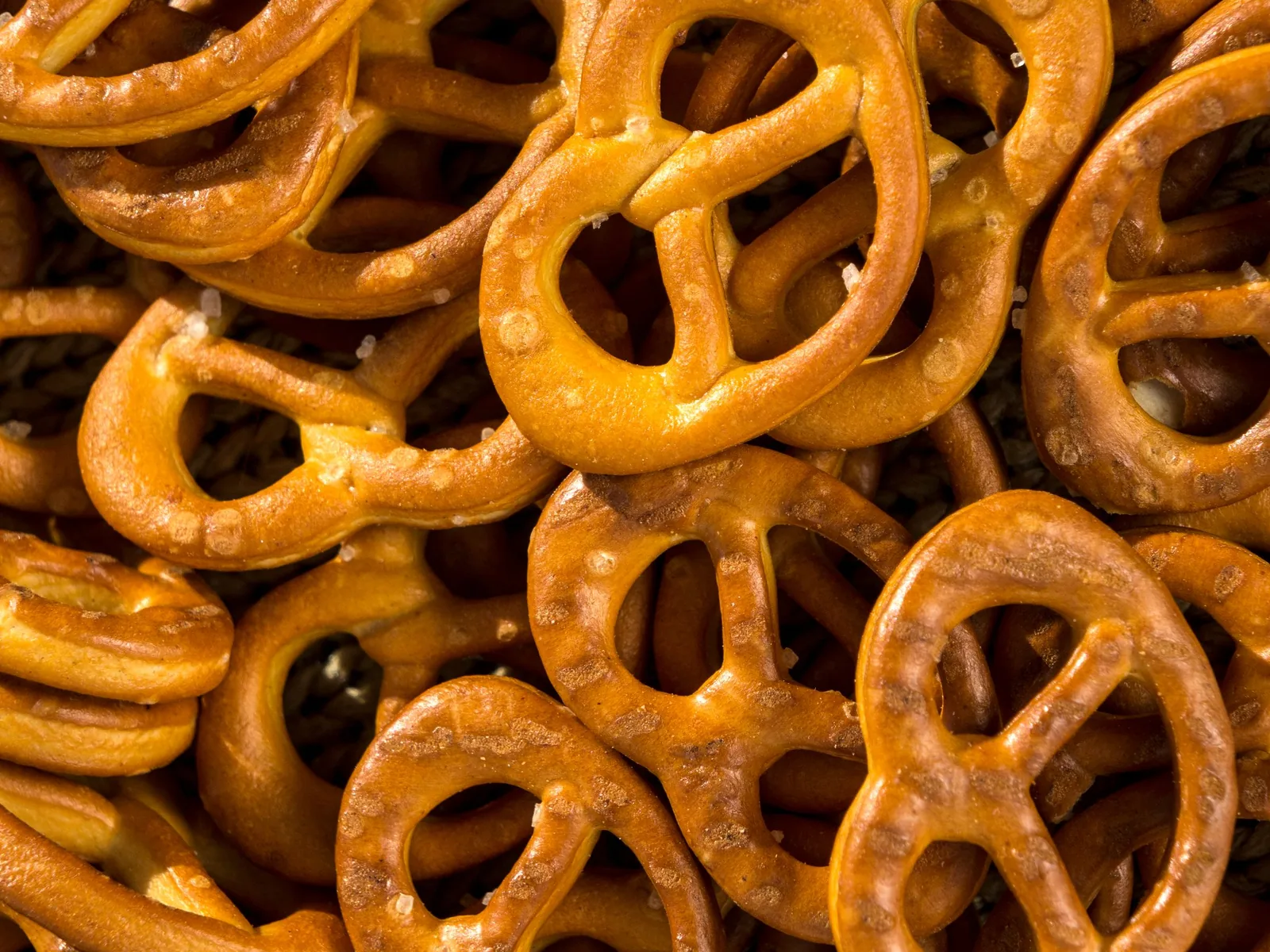
Both start with a similar dough of flour, water, yeast or sourdough, and salt. The difference is in shaping and baking. Soft pretzels are shaped from larger pieces of dough and baked briefly, so they stay bread-like inside. Hard pretzels are thinner and baked longer until they’re dry and crunchy, which is why they keep for weeks in a bag.
Because hard pretzels have most of their water baked out, they’re more calorie-dense by weight, but you usually eat less of them at once. Here’s how USDA’s figures compare per 100 grams:
| Per 100 g (USDA) | Calories | Carbohydrate | Fiber | Sodium |
|---|---|---|---|---|
| Soft pretzel | 338 | 69.4 g | 1.7 g | varies with topping salt |
| Hard pretzel, salted | 384 | 80.4 g | 3.4 g | 1,240 mg |
| Hard pretzel, unsalted | 381 | 79.2 g | 2.8 g | 250 mg |
| Hard pretzel, whole wheat | 362 | 81.3 g | 7.7 g | 203 mg |
| White sandwich bread (for comparison) | 266 | 49.4 g | 2.7 g | 490 mg |
Source: USDA FoodData Central, SR Legacy entries for each food.
Portion is where soft pretzels surprise people. USDA lists a large soft pretzel at 143 grams, which works out to about 480 calories and 99 grams of carbohydrate, before any cheese dip or cinnamon sugar. A one-ounce serving of hard pretzels, by comparison, is about 110 calories.
How much sodium is in pretzels?
It depends almost entirely on the salt on the outside. USDA’s salted hard pretzels have about 1,240 mg of sodium per 100 grams, while unsalted hard pretzels have about 250 mg. In practical terms, a one-ounce handful of salted hard pretzels has roughly 350 mg of sodium.
For context, the FDA notes that the Dietary Guidelines advise adults to keep sodium under 2,300 mg a day, while Americans average about 3,400 mg. On a Nutrition Facts label, 5% Daily Value or less per serving is considered low in sodium and 20% or more is high. Many salted pretzel snacks land somewhere in the middle per serving, and it’s easy to eat two or three servings straight from the bag.
If you’re watching sodium, you can brush off some of the coarse salt from a soft pretzel, choose unsalted hard pretzels, or skip salty dips like cheese sauce.
Are pretzels made with refined flour?
Most are. Traditional pretzels use white wheat flour, often enriched. The American Diabetes Association explains that refining removes the outer layers of the grain along with much of its fiber, vitamins and minerals, and that “enriched” means some vitamins and minerals were added back afterward. Refined starch is digested quickly, which is part of why a pretzel doesn’t keep you full for long.
Are whole-grain pretzels healthier?
They’re a better everyday option. In USDA’s data, whole wheat hard pretzels have more than twice the fiber of regular hard pretzels (7.7 grams versus 3.4 grams per 100 grams) with similar calories. When you shop, the ADA’s advice applies here too: look for “whole wheat” or “whole grain” as the first ingredient rather than “enriched” flour. A pretzel described as “multigrain” or “made with whole grain” may still be mostly white flour.
What is the lye bath, and is it safe?
The glossy, deep-brown crust and distinctive flavor of a classic pretzel come from dipping the shaped dough in an alkaline bath before baking. Traditionally that’s a dilute solution of food-grade lye (sodium hydroxide); King Arthur Baking describes a typical bath as 3% to 4% lye to water by weight. Many home bakers use a baking soda bath instead, which is gentler but gives a paler, duller crust.
Raw lye is caustic, which is why bakers wear gloves and eye protection when handling it. The bath is neutralized during baking, and King Arthur notes that once lye-dipped pretzels are baked, they’re safe to eat. Sodium hydroxide is also affirmed by the FDA as generally recognized as safe for use in food as a pH control agent and processing aid under good manufacturing practice. The one thing to avoid is eating lye-dipped dough before it’s baked.
Do fillings and toppings change the picture?
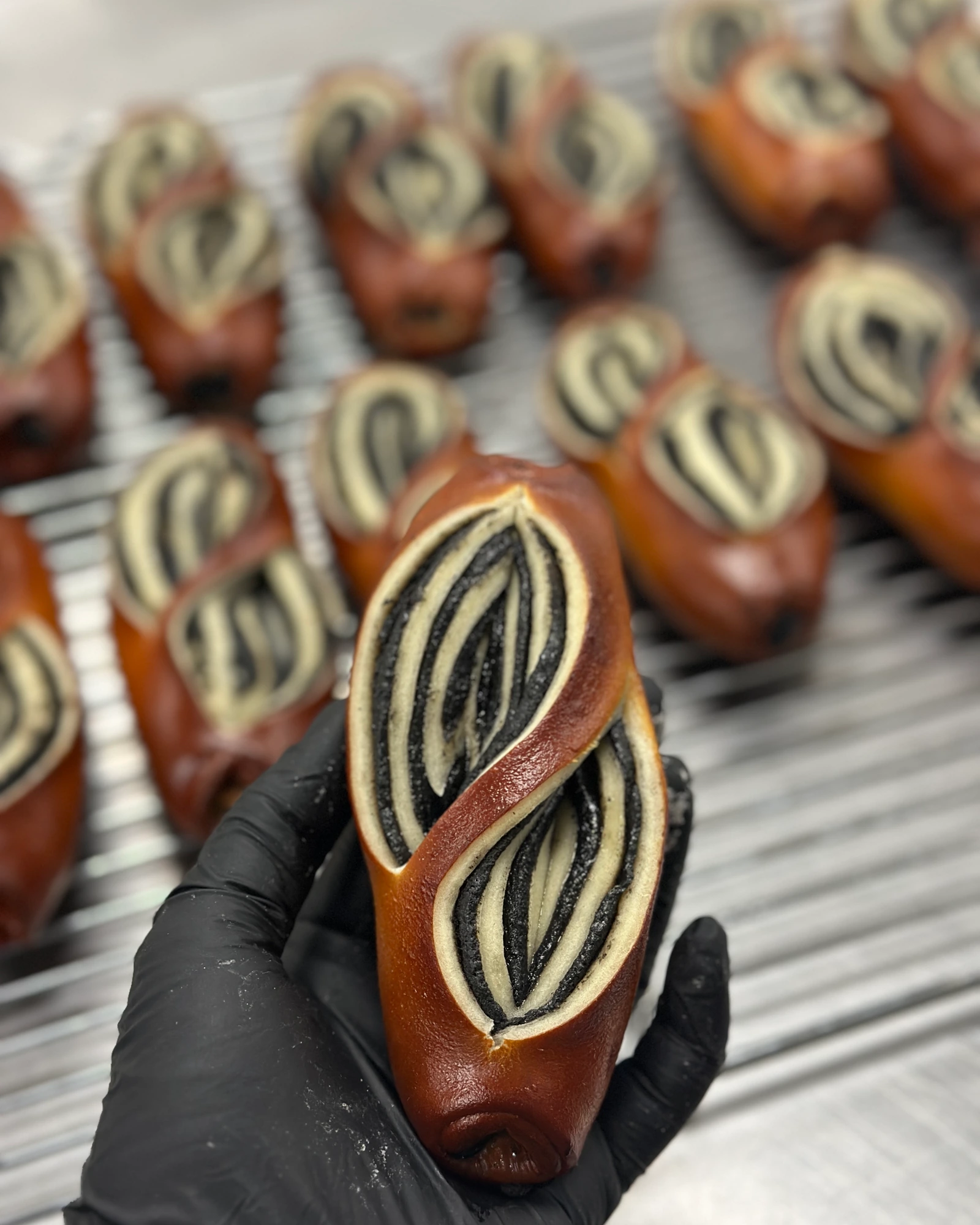
A lot. A plain pretzel is mostly flour, water and salt. Once you add a sweet or rich filling, butter, cheese, or a dip, it becomes more like a pastry: more calories, often more sugar and fat, and sometimes more allergens. That’s not a reason to avoid them, just a reason to call them what they are.
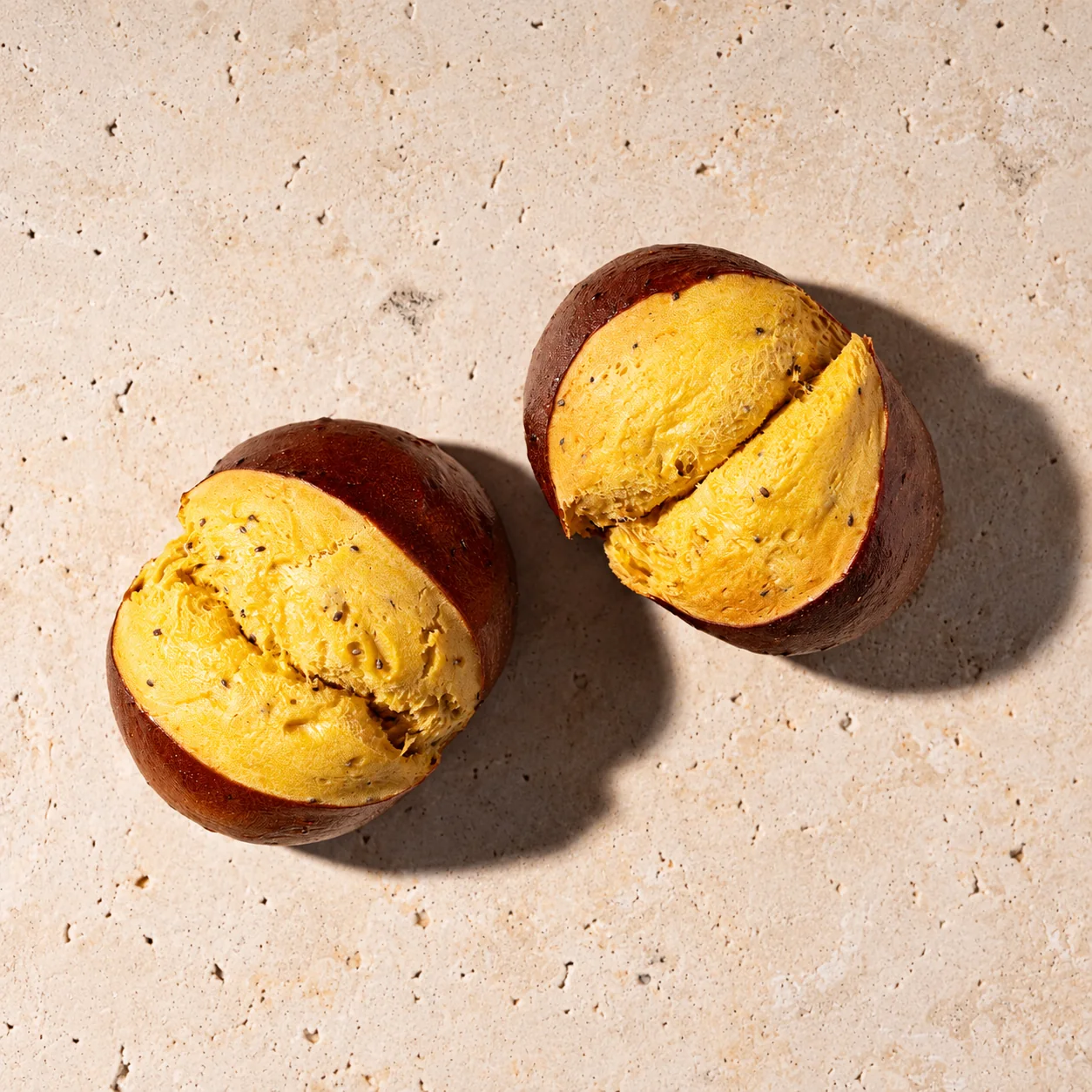
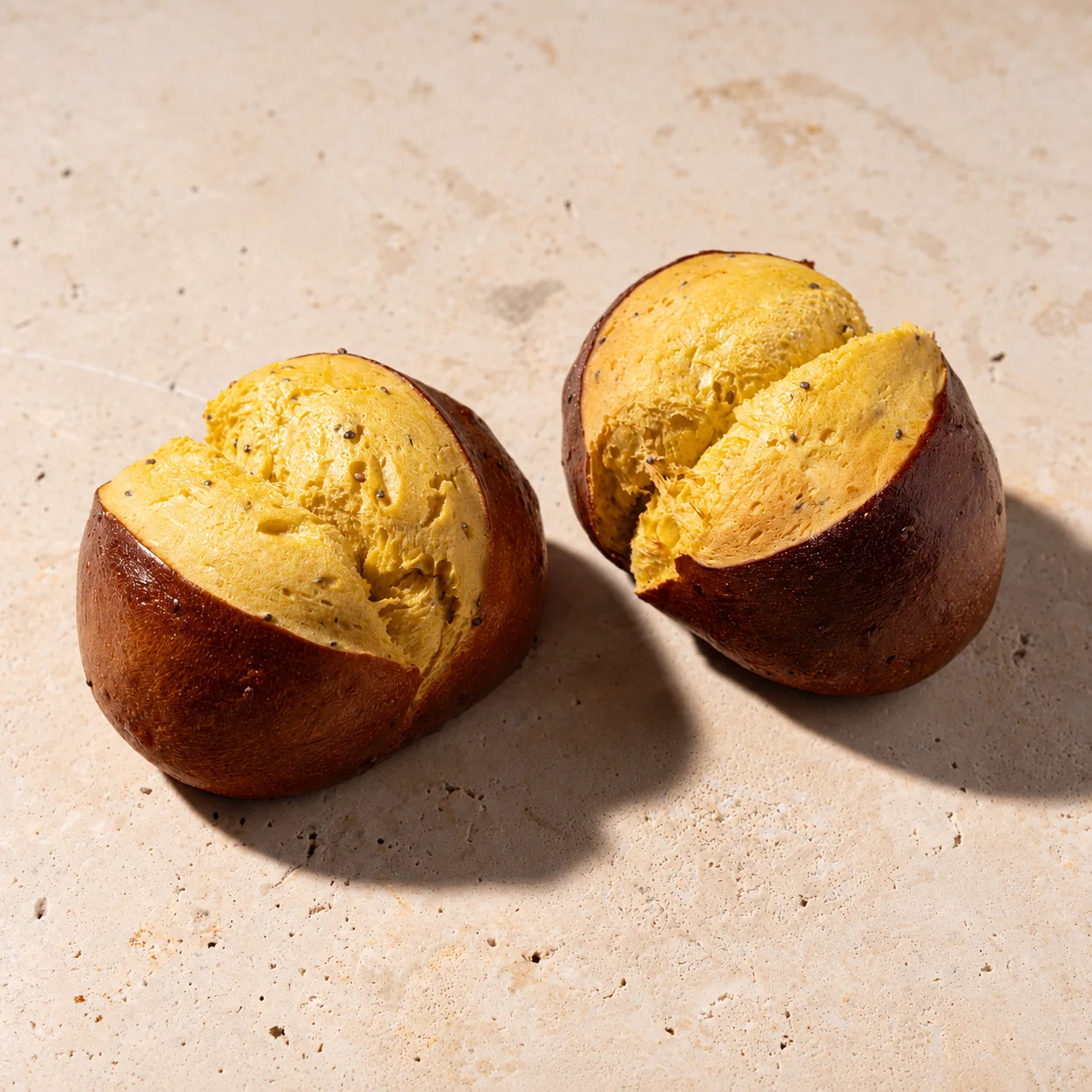
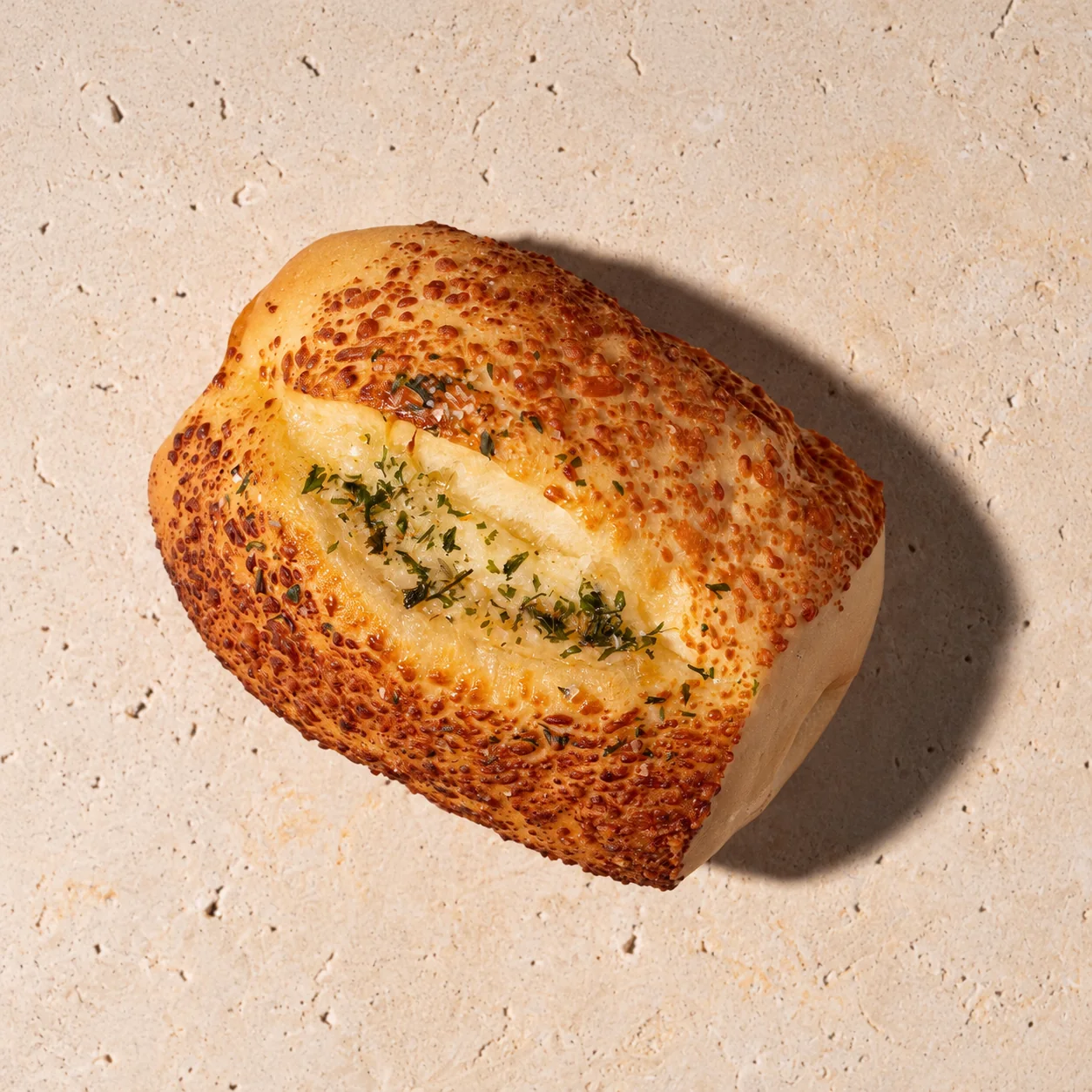
Our own pretzels are a good example. The Black Sesame Soft Pretzel wraps a classic pretzel crust around a black sesame filling, and its ingredients include French T65 wheat flour, sourdough starter, black sesame paste, cultured butter, sugar, honey, nonfat dry milk and heavy cream; it contains wheat, milk and sesame. The Pumpkin Pretzel Roll has pumpkin puree in the dough and is dipped in lye before baking; it’s made with enriched wheat flour and French T65 wheat flour, with sugar, cultured butter and chia seeds, and contains wheat and milk. Both are made mostly from refined flour and include some sugar and butter. We’d call them treats, and we’re happy to.
How can you make pretzels a smarter snack?
- Pick the portion first. Pour a serving into a bowl instead of eating from the bag, or share a large soft pretzel.
- Choose whole wheat or unsalted hard pretzels for everyday snacking.
- Pair them with protein or fiber, such as hummus, nut butter, Greek yogurt dip, cheese or fresh vegetables, so the snack is more filling.
- Go easy on salty or sugary dips, which can add more sodium or sugar than the pretzel itself.
- Save filled and sweet pretzels for when you actually want a treat, and enjoy them.
Pretzels aren’t a health food, and they don’t need to be. Know what’s in them, pay attention to the salt and the portion, and they fit into a balanced diet just fine.
Questions
Are pretzels healthier than potato chips?
Plain hard pretzels are usually much lower in fat than fried chips, but they're mostly refined starch with little fiber, and salted pretzels can be high in sodium. Neither is a nutritious snack on its own, so portion and frequency matter most.
How many calories are in a soft pretzel?
USDA lists a large plain soft pretzel (143 grams) at about 480 calories and roughly 99 grams of carbohydrate. Toppings, dips and fillings add more.
Are unsalted pretzels a good low-sodium snack?
They're a big improvement. USDA's unsalted hard pretzels have about one-fifth the sodium of the salted version, though they're still mostly refined flour.
Is a soft pretzel healthier than hard pretzels?
Not really; they're made from similar dough. A soft pretzel has more water, so it's less calorie-dense by weight, but one large soft pretzel is a much bigger portion than a typical serving of hard pretzels.
Do pretzels contain gluten?
Traditional pretzels are made with wheat flour, so they contain gluten. Gluten-free pretzels exist, made from other flours, and should be labeled as such.
Sources
- USDA FoodData Central (SR Legacy): Pretzels, soft, FDC ID 169064
- USDA FoodData Central (SR Legacy): Snacks, pretzels, hard, plain, salted, FDC ID 167555 (compared with 170249 unsalted and 167965 whole-wheat)
- Sodium in Your Diet (U.S. Food and Drug Administration)
- Get to Know Carbs (American Diabetes Association)
- 21 CFR 184.1763, Sodium hydroxide (Legal Information Institute, Cornell Law School)
- A baker's tips for safely working with lye (King Arthur Baking)
Bake it home

Black Sesame Soft Pretzel