
Is Sourdough Bread Good for Weight Loss?

In short
Sourdough isn't a weight-loss food: it has roughly the same calories as other breads. A whole grain sourdough may keep you fuller than white bread, but studies haven't shown it leads people to eat less overall. Portion and the whole diet matter most.
Sourdough has a reputation as the “healthy” bread, and it’s easy to see how that turns into “the bread that helps you lose weight.” As bakers who make sourdough every day, we’d love that to be true. The honest answer is more modest, and more useful.
Is sourdough bread good for weight loss?
Sourdough isn’t a weight-loss food, and no bread is. Losing weight depends on your overall eating pattern and how much energy you take in compared with what you use. Bread can fit into that, sourdough included, but the leavening isn’t what decides the outcome.
What sourdough can offer, especially when it’s made with whole grain flour, is a loaf that may be digested a little more slowly and feel more filling than white sandwich bread. Whether that leads people to eat less over time is the part research hasn’t shown.
Does sourdough have fewer calories than other bread?
No, not in any way that matters. Bread’s calories come mostly from flour, and fermentation doesn’t remove them. Here’s how common breads compare in USDA FoodData Central, per 100 grams, which is roughly two to four slices depending on how the loaf is cut:
| Bread (USDA entry) | Calories | Carbohydrate | Fiber |
|---|---|---|---|
| French or Vienna bread, includes sourdough | 272 | 51.9 g | 2.2 g |
| White sandwich bread | 266 | 49.4 g | 2.7 g |
| Multigrain bread (includes whole grain) | 265 | 43.3 g | 7.4 g |
| Whole wheat sandwich bread | 252 | 42.7 g | 6.0 g |
| French or Vienna bread, whole wheat | 239 | 49.1 g | 4.2 g |
These are averages for commercially made bread, so any specific loaf, including ours, will differ somewhat.
The differences between breads are small. The difference between one slice and three is not. A thick slice from a large round loaf can weigh twice as much as a slice of sandwich bread, so the knife decides more than the label.
Does sourdough keep you fuller?
Possibly a little, at least in the short term. In a 2025 randomized, double-blind trial, 44 adults ate whole meal sourdough bread rich in lactic acid or whole meal yeast bread for breakfast. After the sourdough they reported less hunger and more fullness, and their stomachs emptied more slowly. But when they were offered an all-you-care-to-eat meal four hours later, they didn’t eat significantly less.
A second trial published in Appetite compared whole meal yeast bread, whole meal sourdough and a combination, each eaten daily for two weeks. Energy intake at the next lunch didn’t differ between the breads, and the slightly higher fullness actually went to the breads containing yeast, which people also ate more slowly.
So the picture is mixed. Some sourdoughs may feel more satisfying, but feeling fuller after breakfast hasn’t been shown to translate into eating fewer calories.
Is whole grain bread better for weight loss?
Whole grain is the stronger lever, though the effect on the scale is smaller than many people expect. In a 12-week randomized trial in The Journal of Nutrition, 79 overweight or obese postmenopausal women followed a calorie-reduced diet that included either whole grain wheat or refined wheat foods. Both groups lost weight, and the difference in weight loss between them was not significant. The whole grain group did lose a greater percentage of body fat, and their LDL cholesterol didn’t rise the way it did in the refined wheat group.
In other words, the calorie reduction drove the weight loss, and whole grain was a better-quality way to eat the bread within it. That’s a reasonable expectation to bring to any loaf.
Does sourdough affect blood sugar, and does that matter for weight?
Sourdough’s acids can slow how quickly starch turns into glucose, and some studies show a smaller blood sugar rise after sourdough than after yeast bread. But people vary a lot. In a crossover trial in Cell Metabolism, adults ate traditional whole grain sourdough or industrial white bread for a week each; on average the researchers found no significant difference in clinical measures, partly because some people responded better to one bread and some to the other.
The link between blood sugar response and body weight is also less settled than it’s often made to sound. Harvard’s Nutrition Source describes the relationship between glycemic index and body weight as less well studied and still controversial.
What is the best bread for weight loss?
There’s no single best loaf, but these qualities make bread easier to fit into a weight-loss plan:
- A whole grain flour listed first in the ingredients, rather than “enriched” flour alone.
- More fiber per slice, from whole grain flour, seeds or oats.
- Little or no added sugar. Sweet and enriched breads such as brioche, milk bread and raisin loaves are lovely, but they’re treats rather than everyday staples.
- A slice size you can control. Pre-sliced bread makes portions predictable; with a whole loaf, cut thinner slices and freeze what you won’t eat soon.
- Bread you actually enjoy, so a measured portion feels satisfying instead of like a compromise.
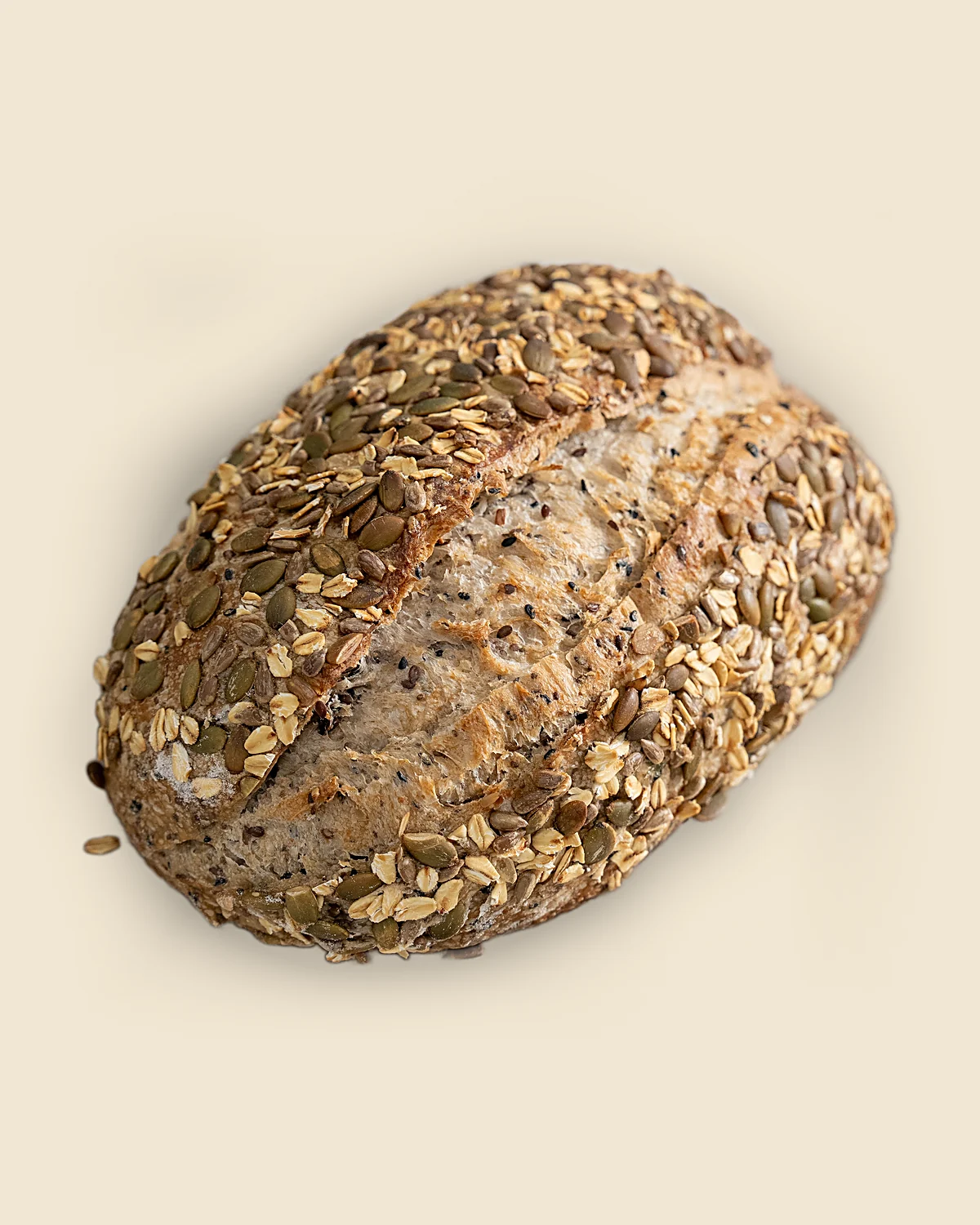
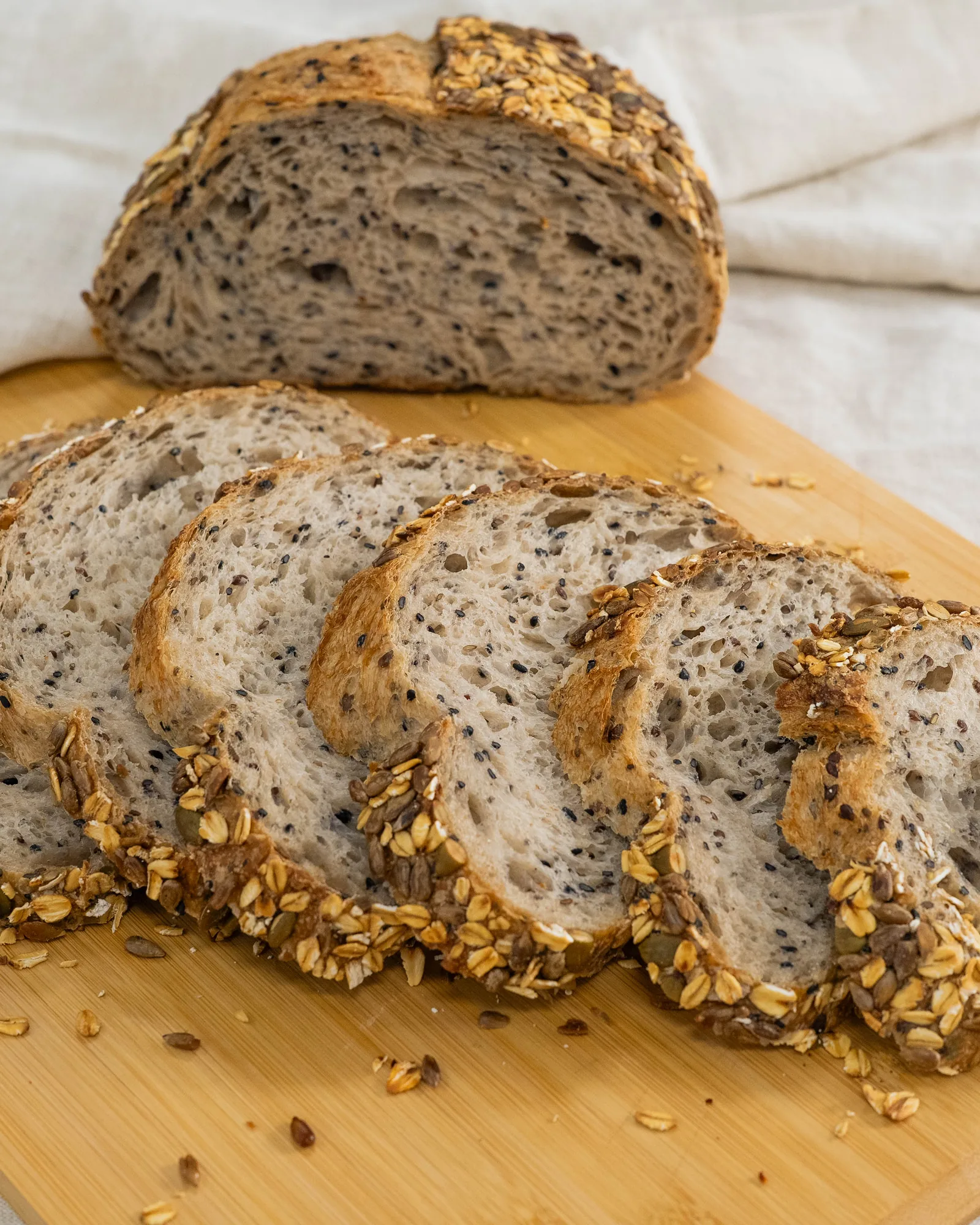
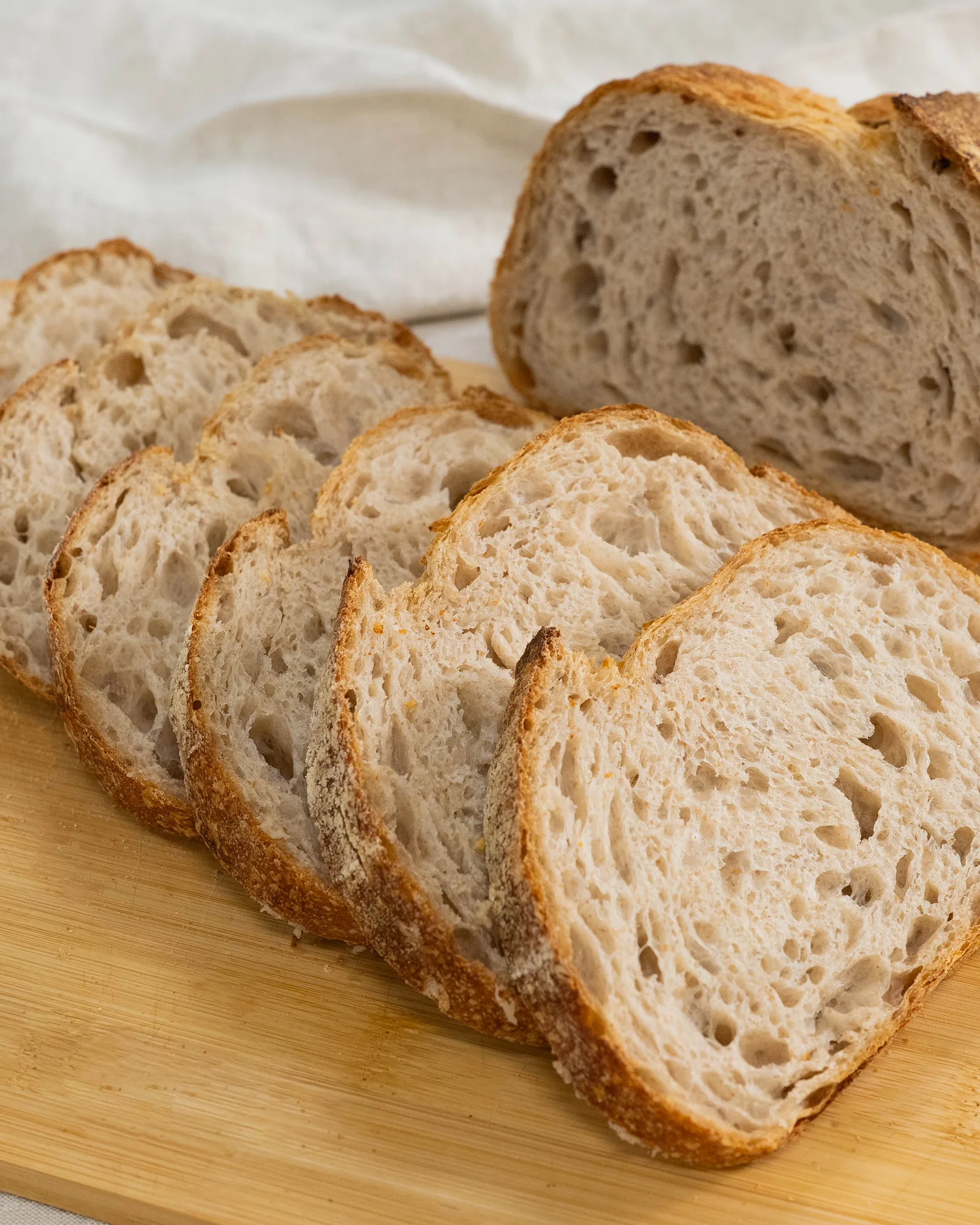
Our Harvest Multigrain Sourdough is folded with flax, sesame, chia, sunflower and pumpkin seeds plus oats, which is the kind of loaf where a single slice tends to go a long way. Our Classic Country Sourdough includes some whole wheat flour alongside French T65 wheat flour. Neither is a diet product; they’re just the kind of bread that rewards slicing thin and eating slowly.
How can you eat bread and still lose weight?

- Measure once. Weigh a typical slice of the bread you buy so you know what a portion looks like.
- Make it part of a meal. Bread with eggs, beans, fish, vegetables or a little olive oil is more filling than bread with jam alone.
- Go open-faced. One slice topped generously instead of two slices around a filling.
- Watch the extras. Butter, cheese and spreads often add more calories than the bread itself.
- Keep it fresh without overbuying. Freezing a loaf in slices means you take out only what you’ll eat; our guide to freezing, thawing and reheating sourdough covers how.
For the broader question of what sourdough does and doesn’t offer nutritionally, see Is Sourdough Bread Healthy?
The bottom line
Sourdough won’t make you lose weight, and it won’t stop you either. It has about the same calories as other bread, a whole grain version may be a little more filling, and the research so far doesn’t show that it makes people eat less. If you’re working on weight, especially with a health condition, a doctor or registered dietitian can help you build a plan that keeps bread you love in it.
Questions
Does sourdough have fewer calories than regular bread?
Not meaningfully. USDA data puts French and sourdough-style bread at about 270 calories per 100 grams, in the same range as white and whole wheat sandwich bread, so slice size matters far more than the leavening.
Will eating sourdough instead of white bread help me lose weight?
There's no good evidence that swapping alone causes weight loss. Whole grain sourdough may be more filling, but trials so far haven't shown people eat less at the next meal because of it.
Is it OK to eat bread every day while trying to lose weight?
Many people do. Weight change comes down to your overall eating pattern and energy balance, so a measured portion of bread can fit; a registered dietitian can help you plan it.
Does the fermentation in sourdough burn fat or speed up metabolism?
No. Fermentation changes the bread's acidity, flavor and how quickly its starch is digested, but there's no evidence it raises metabolism or burns fat.
Which matters more, the type of bread or how much I eat?
For weight, how much you eat and what you eat with it usually matter more. Choosing a whole grain, higher-fiber loaf is a sensible second step.
Sources
- USDA FoodData Central (SR Legacy): Bread, french or vienna (includes sourdough), FDC ID 172675; compared with FDC IDs 174924, 168013, 172688, 174091
- Effect of lactic acid-rich sourdough bread on appetite regulation: a randomized, double-blind controlled trial (Current Research in Food Science, 2025)
- Effect of whole meal yeast-leavened, sourdough-leavened and yeast-sourdough-leavened bread consumption on appetite, energy intake, and postprandial metabolic responses (Appetite, 2026)
- Whole grain compared with refined wheat decreases the percentage of body fat following a 12-week, energy-restricted dietary intervention in postmenopausal women (The Journal of Nutrition, 2012)
- Bread affects clinical parameters and induces gut microbiome-associated personal glycemic responses (Cell Metabolism, 2017)
- Carbohydrates and Blood Sugar (Harvard T.H. Chan School of Public Health)
Bake it home
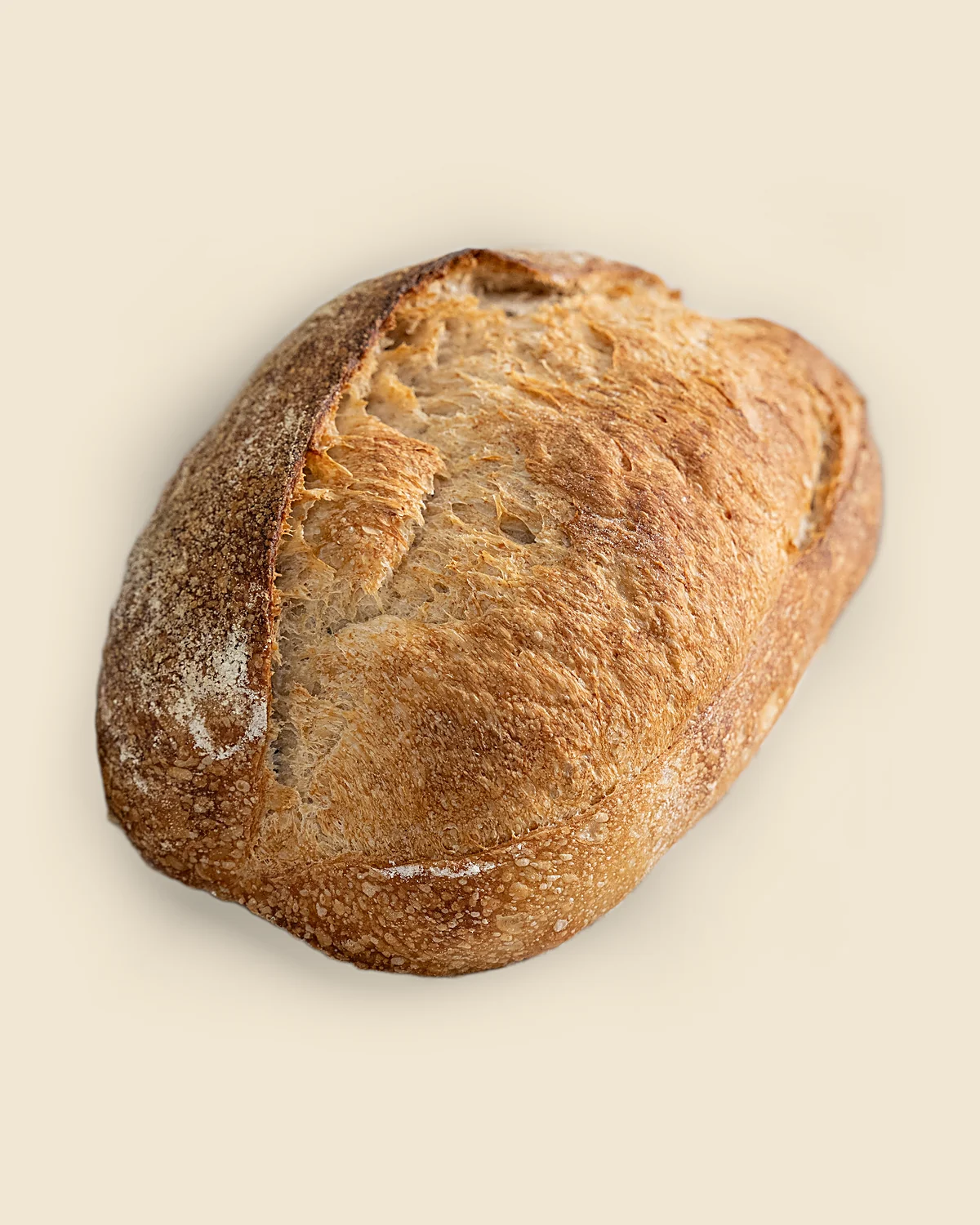
Classic Country Sourdough