


Is Sourdough Bread Healthy? What the Research Actually Says
In short
Sourdough can be a good everyday bread, but it isn't a health food by default. Long fermentation lowers phytate and some fructans, yet human trials show mixed effects on blood sugar. The flour, especially whole grain, matters as much as the method.
Sourdough has a health halo. You’ll hear that it’s gut-friendly, easier to digest and better for blood sugar. Some of that has real science behind it. Some of it is a stretch. As bakers who spend about 20 hours fermenting every loaf, we’d rather you know which is which.
What does long fermentation actually do to bread?
True sourdough is leavened by a culture of wild yeasts and lactic acid bacteria, not by a packet of commercial yeast. As the dough ferments, those bacteria produce acids and the dough’s pH drops. That sour, slow environment changes a few things in the flour before the loaf ever reaches the oven:
- Acidity. A sourdough is typically acidified below pH 5.0, according to a 2023 critical review in Frontiers in Nutrition. That acidity is what gives sourdough its tang and helps it keep longer.
- Phytate breakdown. Grains store minerals bound up in phytate (phytic acid), which can make iron, zinc, magnesium and calcium harder to absorb. The same review explains that sourdough’s acidity loosens those bonds and keeps the flour’s own phytase enzymes working near their best. This matters most for whole-grain flour, which carries more phytate.
- Some FODMAP breakdown. Wheat contains fructans, a type of FODMAP that can trigger symptoms in people with irritable bowel syndrome. Monash University researchers found that breads made with traditional sourdough fermentation had lower FODMAP levels, mostly fructans, than standard modern bread.
- Flavor and keeping quality. These are the most consistent benefits of all. The acids and long fermentation build flavor, and sourdough tends to stale more slowly.
What the research doesn’t show (yet)
Here’s the honest part. Much of the evidence for sourdough’s benefits comes from lab tests and animal studies, not from people eating bread. The same 2023 review concluded that effects inferred in the lab “were not confirmed by randomized clinical trials.” For example, improved mineral availability was confirmed in lab experiments and in rats. How much it changes mineral absorption in humans depends on the grain, the fermentation time and the person.
A 2023 systematic review in Advances in Nutrition looked at 25 clinical trials comparing sourdough bread with yeasted bread. The authors found it “difficult to establish a clear consensus” on sourdough’s health benefits. Too many things vary from study to study: the microbes in the starter, fermentation conditions, the grain and the flour. Some studies using specific strains and conditions did see improvements in glycemic response, fullness or digestive comfort. That is a promising signal, not a blanket rule.
FODMAPs follow the same pattern. Monash notes that results depend on the microbes and the flour, and that a finished bread has to be tested to know its FODMAP level. In clinical trials summarized by the Frontiers review, one wheat sourdough was not better tolerated than yeasted wheat bread by people with wheat sensitivity and IBS. So “sourdough” alone doesn’t mean “low FODMAP.”
A few things sourdough does not do:
- It doesn’t make bread gluten-free or safe for people with celiac disease.
- It doesn’t deliver live probiotics. Baking heats the bread far past what the bacteria survive.
- It isn’t meaningfully lower in calories than other bread made from the same flour.
Does sourdough raise blood sugar less than white bread?
Sometimes, for some people, and not reliably. Lab and small human studies have pointed to a lower glycemic response for some sourdoughs. But when the Frontiers authors weighed the evidence, they noted that a recent meta-analysis found “no convincing evidence” that sourdough lowers glycemic index or improves glucose control.
One of the best-known trials shows why. In a 2017 crossover study in Cell Metabolism, 20 healthy adults ate traditionally made whole-grain sourdough for one week and industrial white bread for another. On average, the researchers found no significant difference between the two breads on the clinical measures they tracked. Individual responses, though, varied a lot: some people had a lower blood-sugar response to the sourdough, others to the white bread. The researchers could predict who would respond which way from each person’s gut bacteria.
Is sourdough bread good for diabetics?
We’re bakers, not clinicians, so we’ll keep this simple. No bread controls blood sugar, and we won’t tell you sourdough does. The research on sourdough and glucose is mixed, and responses differ from person to person.
What health authorities do recommend is less exciting and more useful. The NIH’s National Institute of Diabetes and Digestive and Kidney Diseases includes whole grains in healthy meal plans for people with diabetes. It suggests high-fiber carbohydrate foods fill about a quarter of the plate. It also recommends working with your health care team, including a registered dietitian, to build a plan that works for you. If you have diabetes or prediabetes, talk to your doctor or a registered dietitian before changing how much bread you eat.
Why whole-grain sourdough isn’t the same as white sourdough
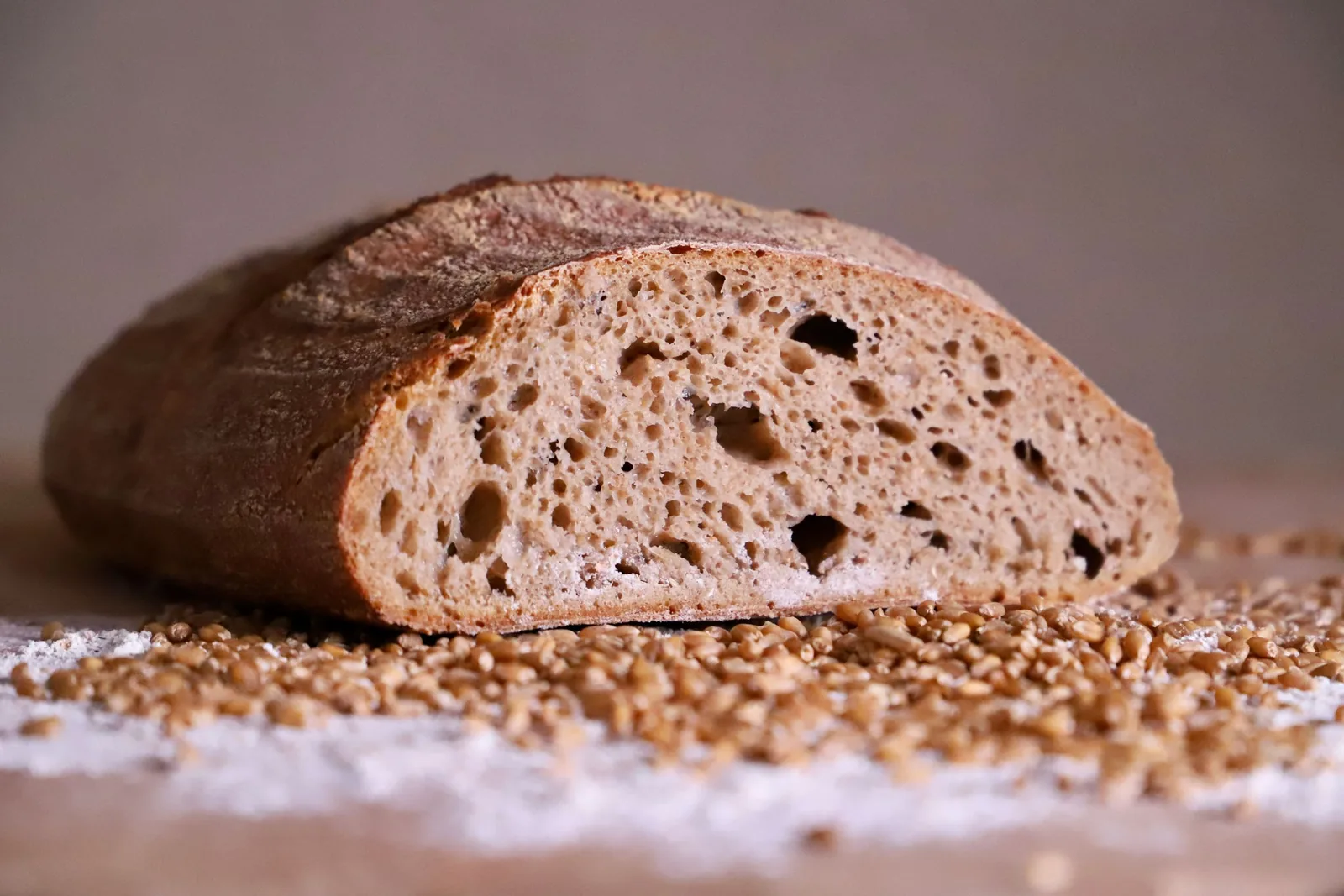
“Sourdough” describes how a bread rises, not what flour it’s made from. A white-flour sourdough and a whole-grain sourdough can share a starter and still be very different foods.
According to Harvard’s School of Public Health, refining wheat strips away the bran and germ, removing more than half of its B vitamins, 90 percent of its vitamin E and virtually all of its fiber. Refined grains also tend to have a higher glycemic index. Bran and fiber, by contrast, slow the breakdown of starch into glucose.
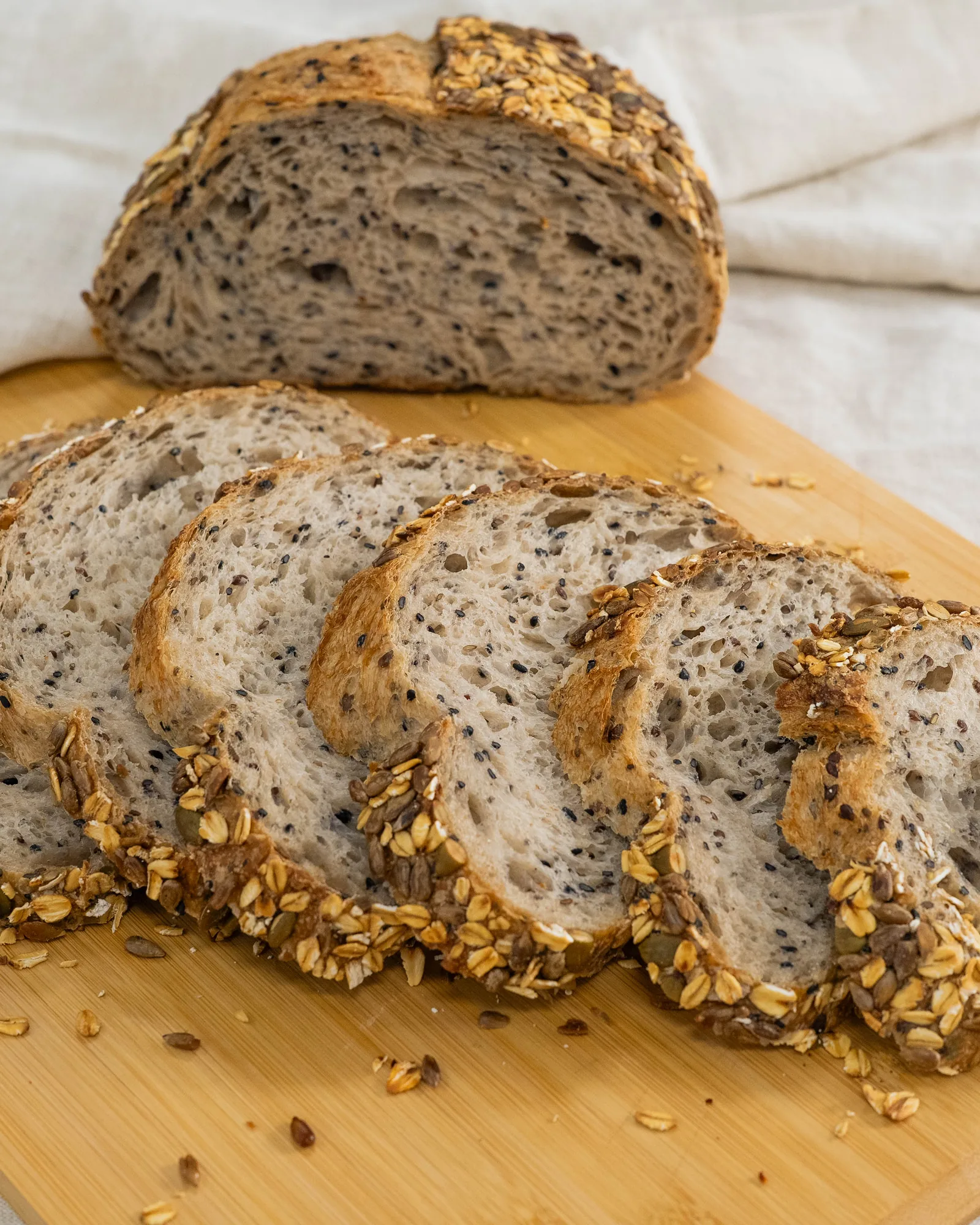
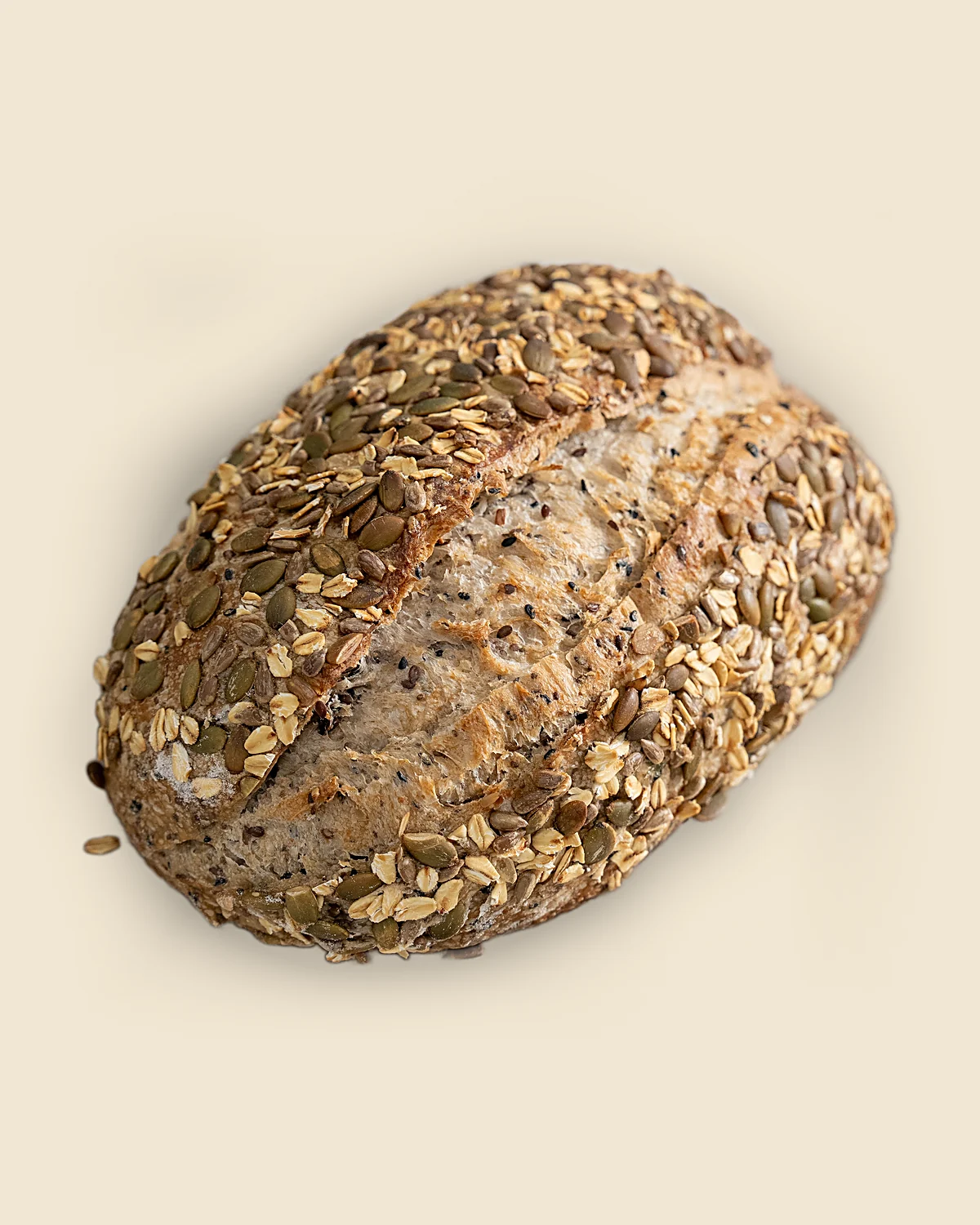
So if nutrition is your main reason for choosing sourdough, the flour is at least as important as the fermentation. We bake with French T65 flour, a wheat flour, alongside stone-milled whole grains, and the balance differs from loaf to loaf. If whole grain is your priority, read the ingredient list before you buy — ours is on every product page. Our Harvest Multigrain Sourdough, for example, combines whole wheat flour with flax, sesame, chia, sunflower and pumpkin seeds and oats.
How to tell if store-bought “sourdough” is the real thing
The word “sourdough” on a bag doesn’t tell you how the bread was made. Some supermarket loaves are leavened mainly with commercial yeast and get their tang from added acids or flavorings. Read the ingredient list:
- Look for a short list: flour, water, salt and a starter (often listed as “sourdough culture,” “levain” or “starter”).
- Be cautious if you see “yeast” high on the list, or vinegar, lactic acid, acetic acid or “sourdough flavor.” These can mimic sourdough’s taste without the long fermentation.
- Check the flour. If whole grain matters to you, Harvard suggests looking for a whole grain first or second on the ingredient list.
For the record, here’s how we make ours. Our sourdough loaves are naturally leavened with levains we raise and feed by hand every day, never with commercial yeast. Each loaf gets a long cold ferment of about 20 hours. The ingredients are French T65 flour, stone-milled whole grains, water, sea salt and our own levain, with no dough conditioners, preservatives, softeners or colorings.
The bottom line
Sourdough is a well-made, flavorful bread, and long fermentation does change the dough in interesting ways. But the human evidence for specific health benefits is still thin and inconsistent. If you want the most nutrition from your bread, choose a real sourdough with plenty of whole grain, eat it as part of a balanced meal, and enjoy it. All of our breads contain wheat. If you have a medical condition, your doctor or dietitian is the right person to ask.
Questions
Is sourdough healthier than regular white bread?
It can be a little different, but not dramatically. Fermentation changes some compounds in the dough, while the flour, especially how much whole grain it contains, often matters more.
Does sourdough have probiotics?
Not live ones you can count on. Baking heats the loaf well past what lactic acid bacteria and yeasts survive, so the benefits people discuss come from what fermentation changed in the dough before baking.
Is sourdough okay if I have IBS?
Some people with IBS tolerate long-fermented sourdough better, and Monash University has certified some sourdough breads as low FODMAP. Results vary by flour and process, so work with your doctor or a dietitian rather than assuming any sourdough is low FODMAP.
Is sourdough lower in calories?
Not meaningfully. A slice of sourdough has roughly the calories of a similar-sized slice of other bread made from the same flour.
Can people with diabetes eat sourdough?
Many people with diabetes include bread in their meals, but how much and which kind is an individual decision. Studies on sourdough and blood sugar are mixed, so ask your doctor or a registered dietitian how bread fits your plan.
Sources
- Does sourdough bread provide clinically relevant health benefits? (D'Amico et al., Frontiers in Nutrition, 2023)
- Nutritional benefits of sourdoughs: a systematic review (Ribet et al., Advances in Nutrition, 2023)
- Bread affects clinical parameters and induces gut microbiome-associated personal glycemic responses (Korem et al., Cell Metabolism, 2017)
- Can the ancient process of sourdough be used to create bread for people with IBS? (Monash University FODMAP)
- Whole Grains (Harvard T.H. Chan School of Public Health, The Nutrition Source)
- Diabetes Diet, Eating, & Physical Activity (NIH, NIDDK)
Bake it home
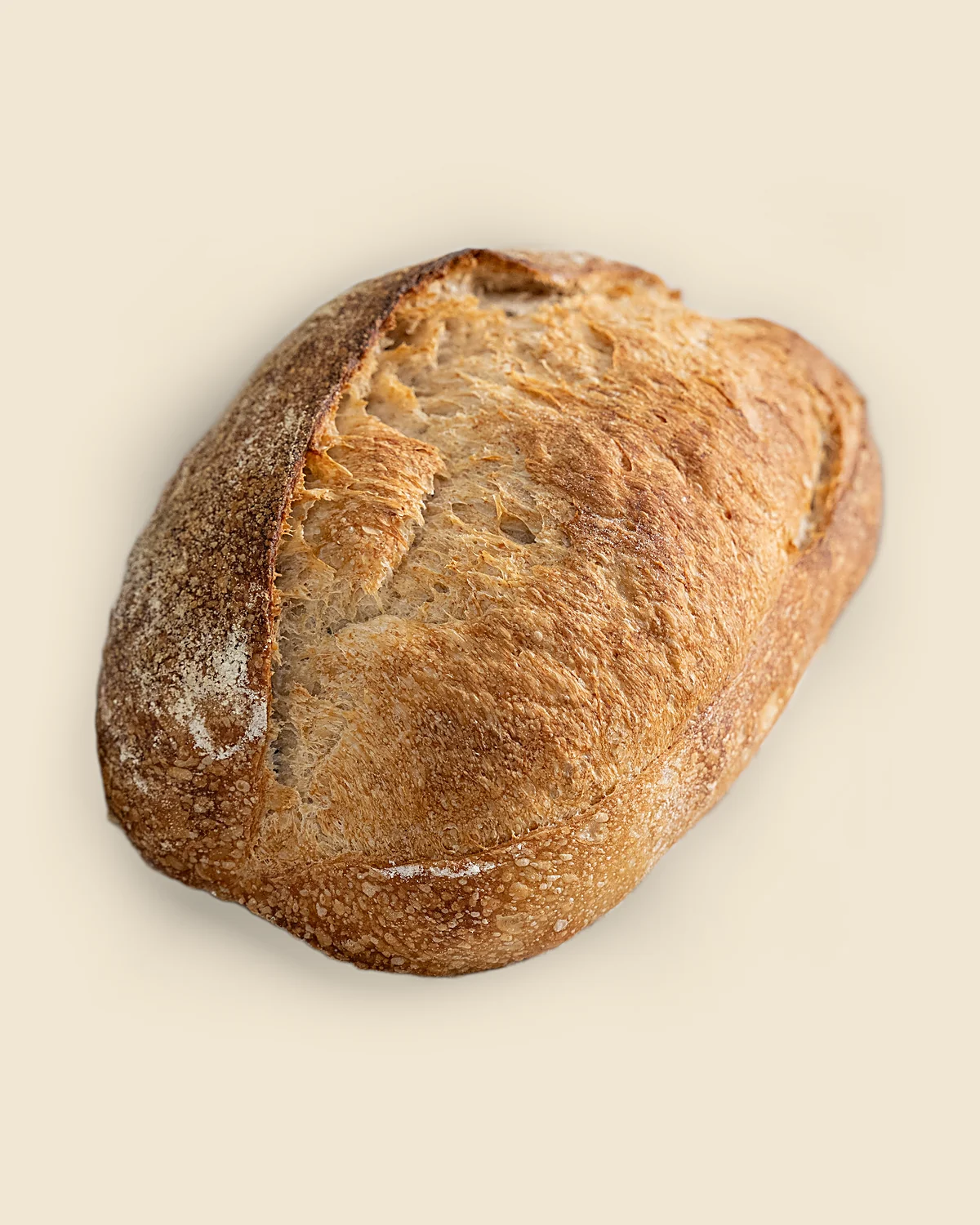
Classic Country Sourdough
Harvest Multigrain Sourdough