Real Sourdough Bread: How to Tell It’s the Real Thing (and Where to Buy It)
In short
Real sourdough bread is raised only by a sourdough starter of wild yeasts and lactic acid bacteria, fermented for hours. Check the ingredients: no yeast, vinegar, added acids, sourdough flavoring or dough conditioners.
“Sourdough” on a bag doesn’t always mean the bread was raised by a sourdough starter. Some loaves get their rise from commercial yeast and their tang from vinegar, added acids or a sourdough flavoring. Bakers have a nickname for these: “sourfaux.” The good news is that real sourdough bread is easy to spot once you know where to look, and the ingredient list does most of the work.
What makes sourdough bread “real”?
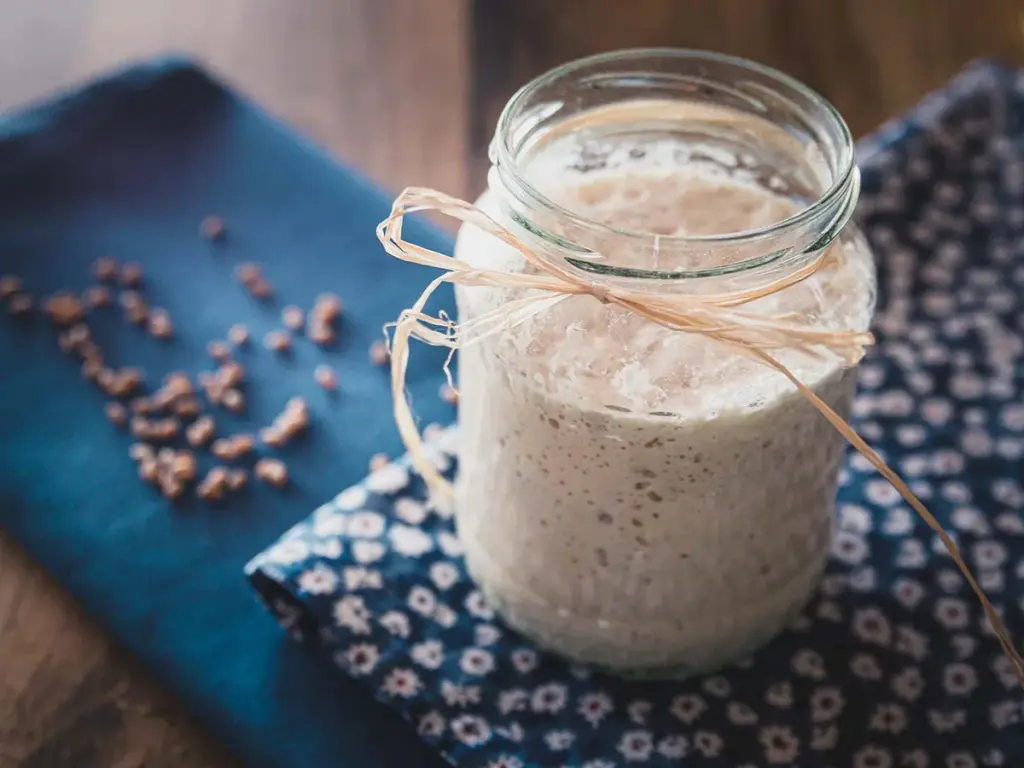
Real sourdough is bread leavened by a sourdough starter: a mix of flour and water that’s been fermented by wild yeasts and lactic acid bacteria. Food scientists describe sourdough in exactly those terms, as a flour-water mixture fermented by lactic acid bacteria and yeasts (Pradal et al., Crit Rev Food Sci Nutr, 2026). The yeasts make the gas that lifts the dough. The bacteria make lactic and acetic acids, which give sourdough its tang, its depth of flavor and its chewy, open crumb.
That fermentation takes time. A starter is far slower than a packet of commercial yeast, so real sourdough usually ferments for many hours, often overnight in the cold. The basic recipe is short: flour, water, salt and starter. Many bakeries call their starter a levain; if you want to know how it’s kept alive and fed, we explain it in What Is Levain?
Is there a legal definition of sourdough?
Not a single, widely agreed one. A 2024 scoping review of 253 sourdough breadmaking studies, written by several of the field’s leading researchers, found large variations in the type and amount of leavening agent and in fermentation conditions, and said its aim was to help the dialogue on how sourdough bread should be defined (De Bondt et al., Annu Rev Food Sci Technol, 2024). In the UK, the Real Bread Campaign is pushing for a legal definition of the word “sourdough” so shoppers know what they’re buying.
The Campaign is also where the word “sourfaux” comes from. It uses it for any product named or marketed as sourdough that uses additives and/or a raising agent other than a live sourdough culture, such as baker’s yeast or baking powder (Real Bread Campaign). That’s a UK campaign’s standard, not a US rule, but it’s a useful yardstick anywhere.
Real sourdough vs. sourfaux: what’s the difference?
| Real sourdough | Sourfaux / sourdough-style bread | |
|---|---|---|
| What makes it rise | Sourdough starter (wild yeasts + lactic acid bacteria) | Commercial yeast, sometimes chemical leaveners, with or without a little starter |
| Where the sour taste comes from | Acids made by bacteria during fermentation | Often vinegar, added acids, sourdough flavoring or dried sourdough powder |
| Typical ingredients | Flour, water, salt, starter (plus any add-ins like seeds or cheese) | Longer list: yeast, acidulants, dough conditioners, preservatives, sugars |
| Fermentation time | Long, many hours to overnight | Often short, about as quick as ordinary yeast bread |
| Flavor | Layered tang that varies from mild to sharp | Flat or one-note sourness, sometimes vinegary |
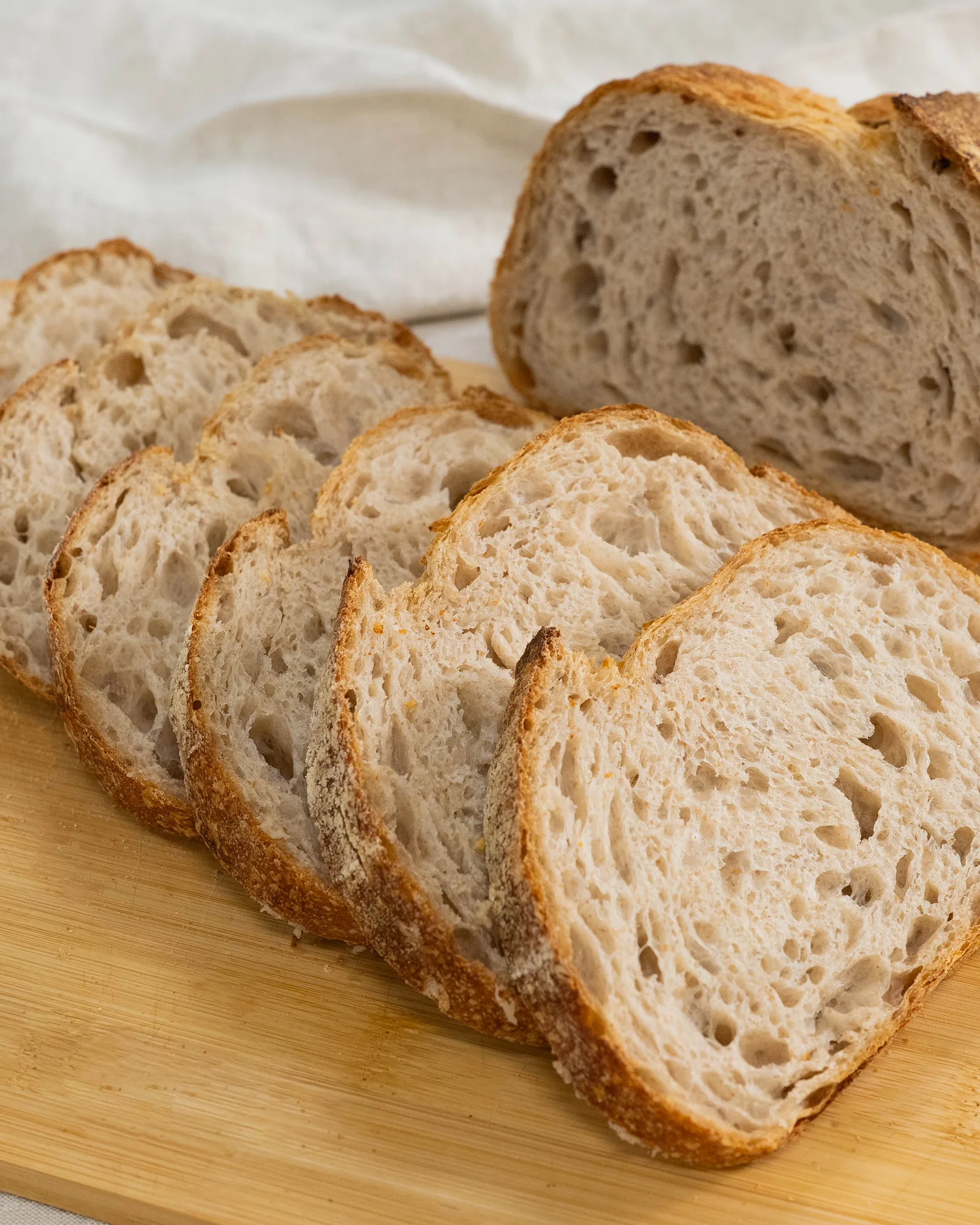
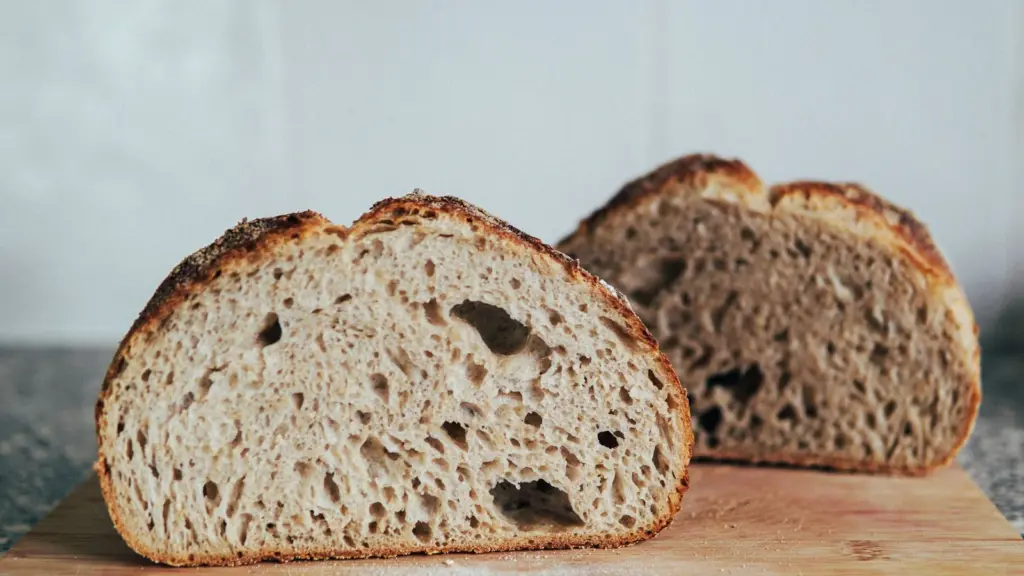
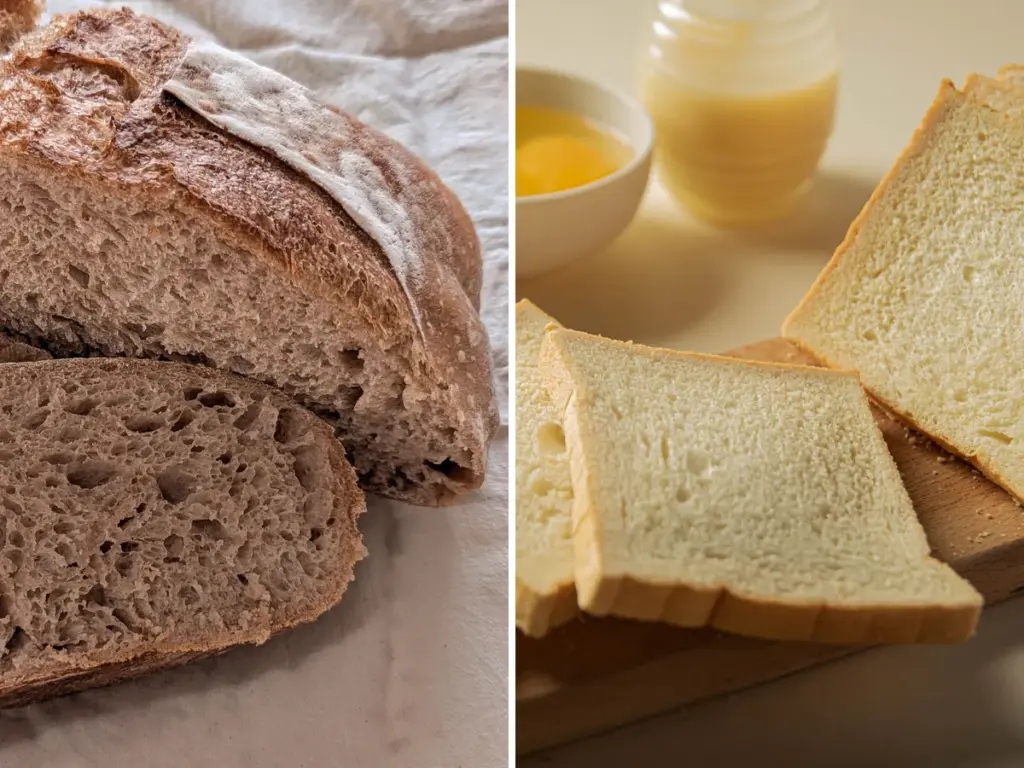
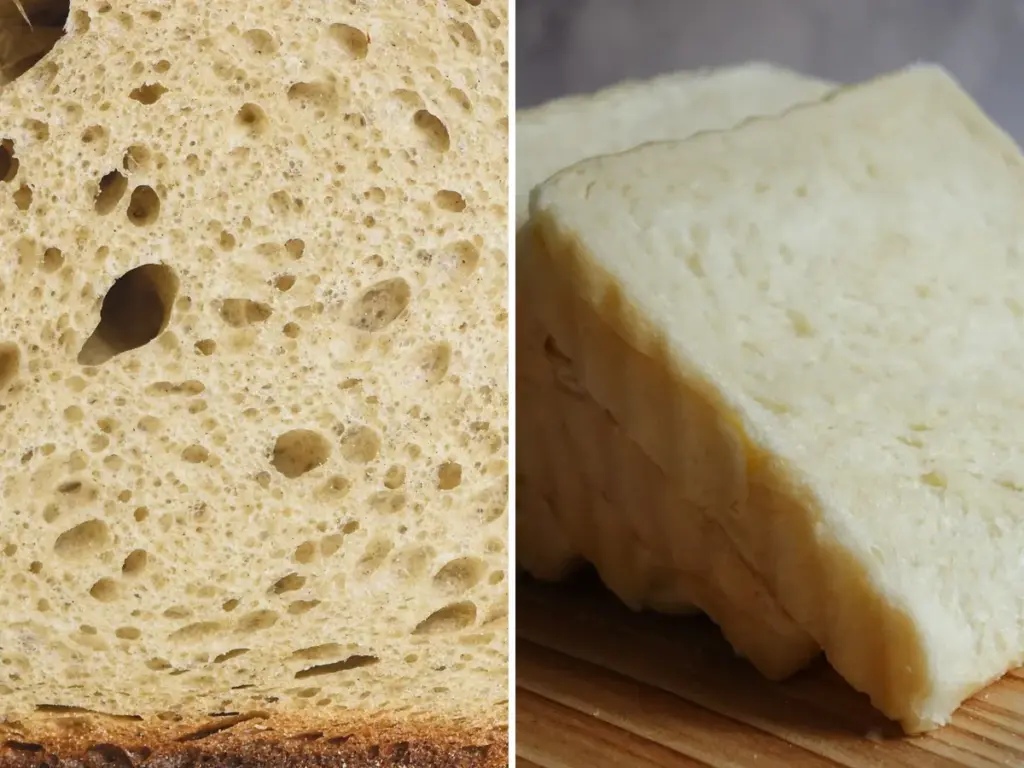
| Crumb and crust | Irregular holes, glossy crumb, deep-colored, crackly crust | Even, cottony crumb; soft, pale crust |
| Label clue | No “yeast” in the ingredient list | “Yeast” listed, often near the end, alongside acids or flavorings |
Why do some breads labeled sourdough use yeast?
Mostly speed and consistency. A starter-raised dough needs hours of fermentation and a baker who keeps the culture healthy every day. Commercial yeast can raise a loaf in a fraction of that time and behaves the same way batch after batch, which suits large-scale production. Adding vinegar, acids or sourdough flavoring then gives the bread a sour note without the wait.
That doesn’t make those loaves bad bread, just a different product. A yeasted bread with a sour flavor can taste fine. It simply isn’t naturally leavened, and if you’re paying for sourdough, it’s fair to want the real process.
How do you read a sourdough label?
In the US, ingredients have to be listed by their common name in descending order of predominance by weight (21 CFR 101.4). So start at the top and read the whole list. These are the red flags:
- Yeast. If “yeast” or “baker’s yeast” appears, commercial yeast is doing at least some of the rising. A loaf can contain both starter and yeast; by the Real Bread Campaign’s standard, that’s sourfaux.
- Vinegar, lactic acid, acetic acid or “acidulants.” These add sourness without fermentation. (Vinegar inside an add-in, like pickled jalapeños, is a different case; vinegar or acid added to the dough itself is the tell.)
- “Sourdough flavor,” “sourdough powder” or “dried sourdough.” These are used for flavor, not for rise, so check whether yeast appears in the same list.
- Dough conditioners and preservatives. Names like DATEM, sodium stearoyl lactylate or calcium propionate suggest a fast, industrial process rather than a long ferment.
- Baking soda or baking powder. Chemical leaveners have no place in a naturally leavened loaf.
Words like “artisan,” “rustic” or “San Francisco style” on the front of the bag don’t tell you how the bread was made. The ingredient list does.
How can you tell real sourdough without a label?
At a bakery counter or farmers market stall, there often isn’t a label. Ask the baker three questions:
- “Is it raised only with starter, or is there yeast in it too?” A sourdough baker will answer this instantly.
- “How long does the dough ferment?” Expect an answer in hours, often overnight or longer.
- “Do you keep your own starter?” Bakeries making real sourdough usually maintain and feed their own culture.
Then use your senses:
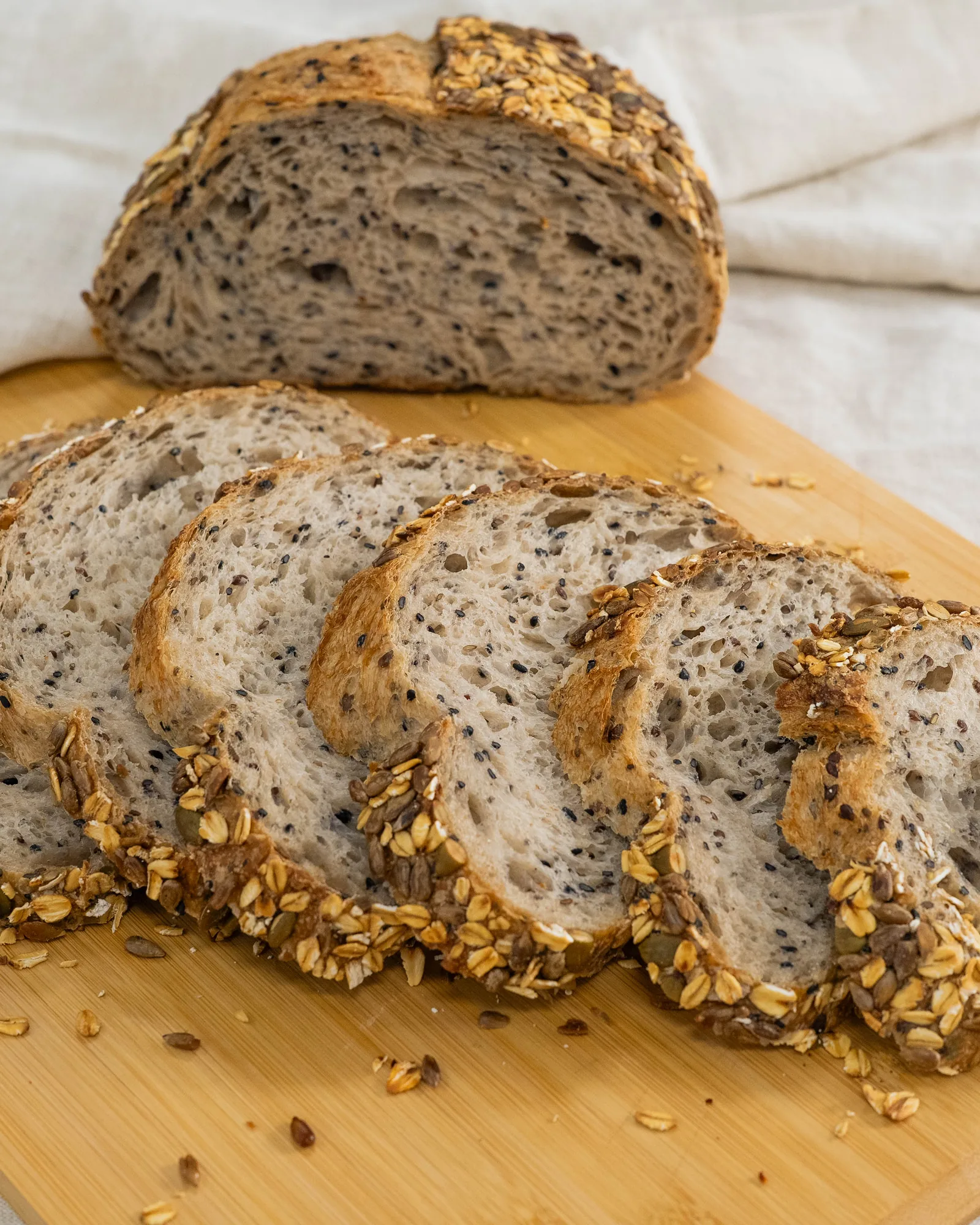
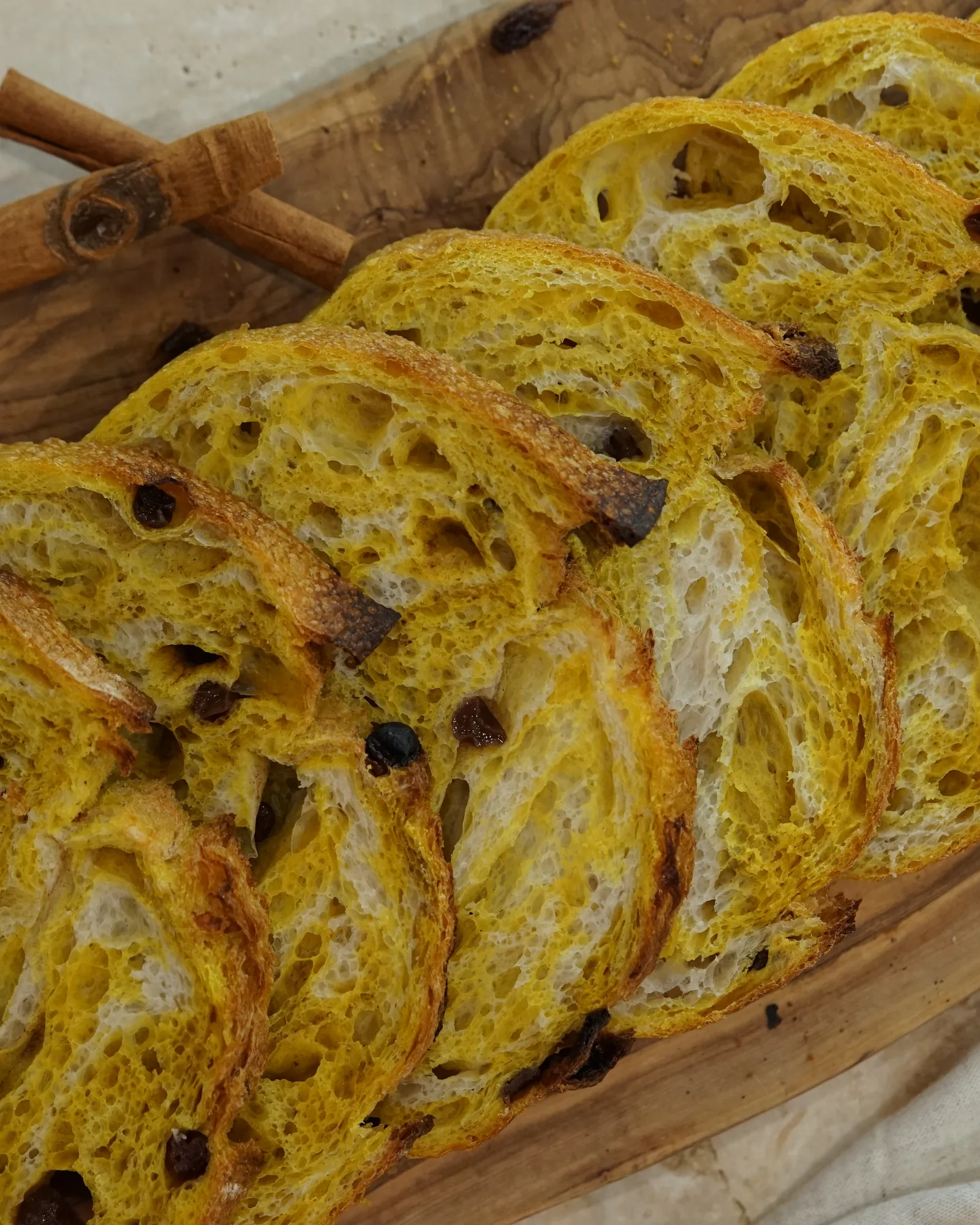
- Crust: deeply browned, sometimes blistered, and crackly when fresh, not pale and soft.
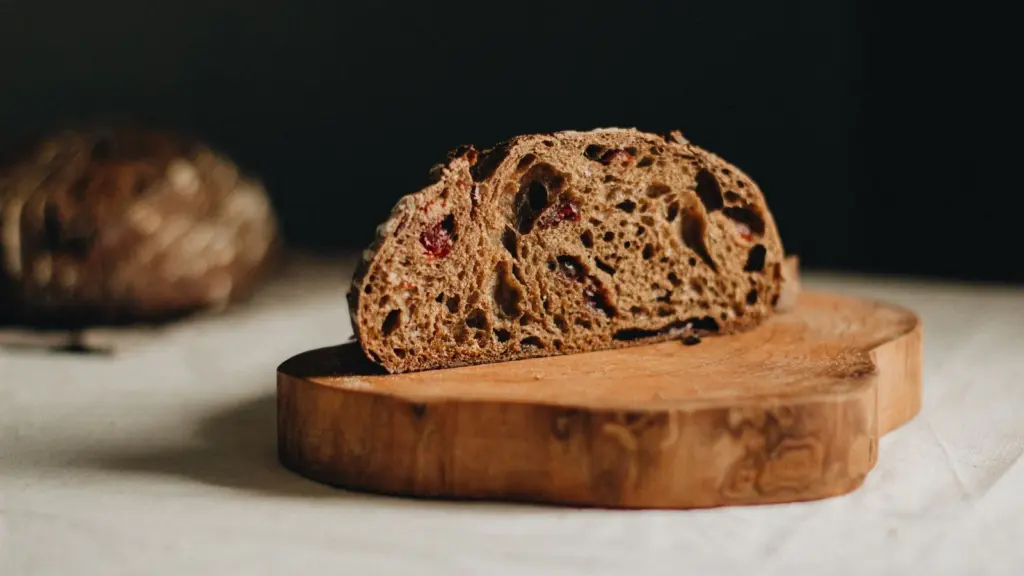
- Crumb: irregular holes of different sizes and a slightly shiny, moist look. (Seeded, whole-grain and sandwich-style sourdoughs will be tighter, which is fine.)
- Smell and taste: a clean, mildly sour, wheaty aroma and a tang that builds as you chew. A sharp vinegar hit right away is a warning sign.
Where can you buy real sourdough bread?
The most reliable places are the ones where you can talk to the person who made the bread, or at least read a full ingredient list:
- Local bakeries. Look for a short ingredient list on the shelf tag or website, and ask the questions above.
- Farmers markets. Small bakers often sell here, and they’re usually happy to talk about their starter and fermentation.
- Online and delivery bakeries. Check the product page for full ingredients. Frozen delivery is common for good bread, since freezing at peak freshness holds quality well; our guide to freezing, thawing and reheating sourdough covers how to bring it back.
- Grocery stores. Real sourdough is out there, but read every label. The bakery-section loaf without a label is worth asking about at the counter.
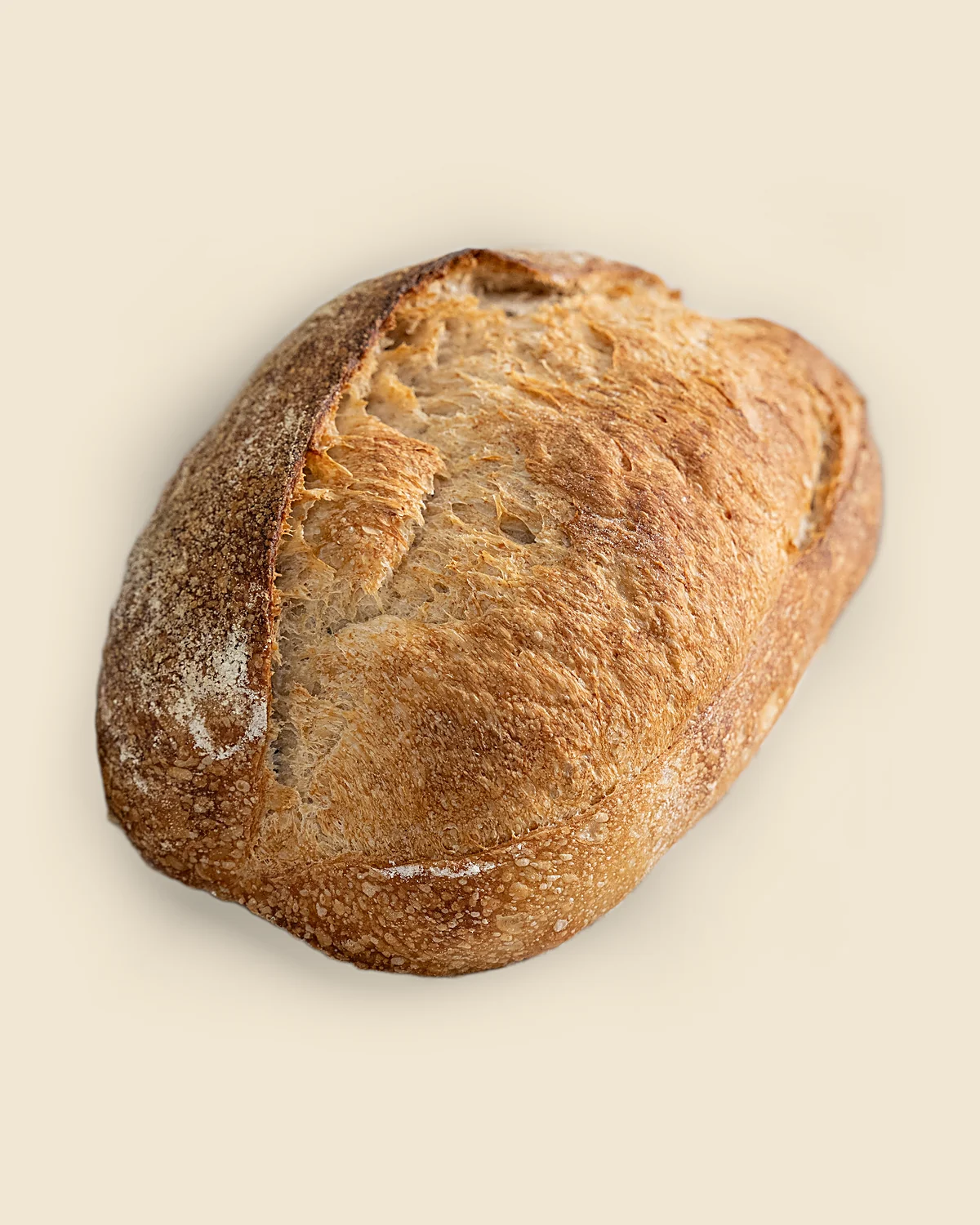
If you’re in California, we’re one option. At Hour 20, our sourdough loaves are naturally leavened with levains we raise in-house and feed daily, then cold fermented for about 20 hours, with no dough conditioners or preservatives. A loaf like our Classic Country Sourdough is French T65 wheat flour, whole wheat flour, sourdough starter, water and sea salt. We bake to peak, flash-freeze and deliver across California, and you can also find us at LA farmers markets or pick up at our bakehouse.
A quick checklist for buying real sourdough
- Ingredient list is short: flour, water, salt, starter, plus any add-ins.
- No yeast, baking soda or baking powder.
- No vinegar, lactic acid or acetic acid added to the dough, and no “sourdough flavor” or powder.
- No dough conditioners or preservatives.
- The baker can tell you how long it ferments, and the answer is in hours.
- The crust is well browned and the flavor builds as you chew rather than hitting you with vinegar.
One note: “real” sourdough is about how the bread is made, not a promise about nutrition. If you’re curious what research says about sourdough and health, we cover it separately in Is Sourdough Bread Healthy?
Questions
Can real sourdough contain any commercial yeast?
Purists say no. Some bakers add a little yeast alongside starter for a faster rise, but by the Real Bread Campaign’s standard any added yeast makes it sourfaux. If you want naturally leavened bread, look for no yeast on the label.
Is all sourdough bread sour?
No. Sourness depends on the starter, the flour and the fermentation temperature and time. Many real sourdoughs are only mildly tangy, so a gentle flavor isn’t a sign of a fake.
What is the best sourdough bread to buy?
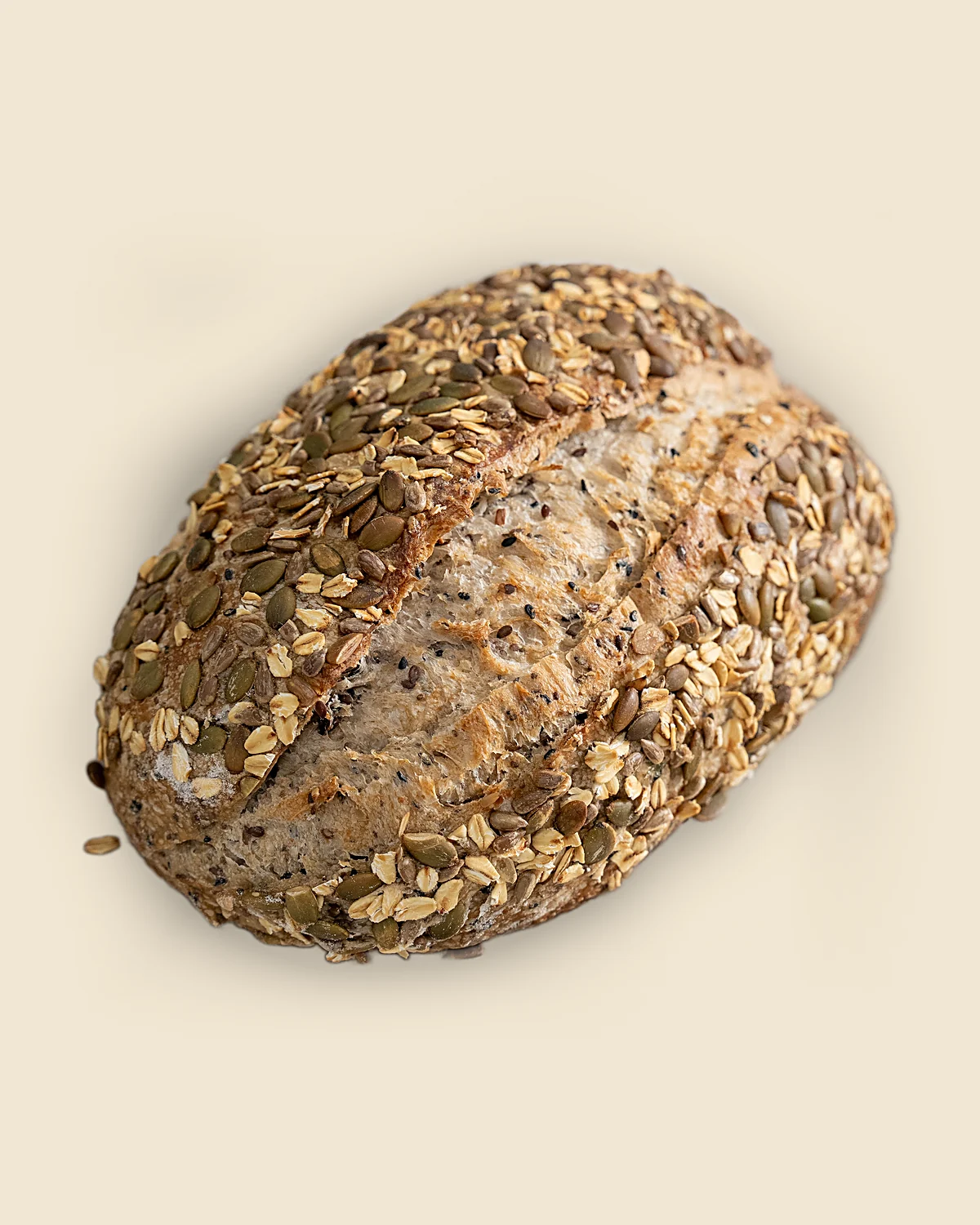
The best one is naturally leavened with a short ingredient list and a long ferment, from a baker who can tell you how it’s made. Beyond that, pick the style you like: country, whole grain, seeded or rye.
Does real sourdough have to be made with white flour?
No. Sourdough describes how bread rises, not the flour, so it can be white, whole wheat, rye or a blend.
Is frozen sourdough still real sourdough?
Yes. Freezing doesn’t change how the bread was leavened. Bread frozen soon after baking and reheated properly keeps its crust and crumb well.
Sources
- Starter cultures for sourdough production: rational selection, mixed-strain starter cultures, and strain monitoring (Pradal, Weckx, De Vuyst; Crit Rev Food Sci Nutr, 2026; PMID 42133548)
- Wheat Sourdough Breadmaking: A Scoping Review (De Bondt et al.; Annu Rev Food Sci Technol, 2024; PMID 38271645)
- Real Bread Campaign (Sustain): Sourdough and sourfaux
- 21 CFR 101.4 — Food; designation of ingredients (Cornell LII)
Bake it home
Classic Country Sourdough
Harvest Multigrain Sourdough